Thursday, November 22, 2018

United Sons of America - "Greetings From The U.S. of A." (1970)

The story has been told before, an album found for a cheap price in a second-hand store, a cover that looks pretty cool, the recording year was 1970. And of course, the cliché on the back that This album was made to be played loud. Well, it was worth a shot.

United Sons of America recorded only this album, which, at least here in Montreal, you regularly find in the second-hand stores. It usually costs around 2-3 dollars. The members were Gerry Blake, Jerry Ritchey, Steve Woods, Mike Hulstis and Richard Freeman. Their possibly continued musical careers are hidden in the dark, as well as more information about the band, despite the infinite resources of the internet. A bit of a mystery.


It's an alright album, nothing out of the ordinary, but no worse than anything else put on a vinyl. Blues based rock, with some splashes of psychedelia, funk and maybe soul. At times I get some Steppenwolf vibes, although United Sons of America is more gentle. Half of the songs are covers, while the band is responsible for one half, Blake is the main songwriter. He has among other things written the record's opening song, Tomorrow Is Today, which is one of the album's better songs, at least the first half of it (the second half is kind of boring). Then there are a lot of blues rock songs, sung with a raspy voice, which is not really my thing. None of these songs are in any way above others in the same genre. Somewhere, a cheesy ballad is thrown in with strings, which is also not a favorite, even though the flute partially rescues the song.

But towards the end it becomes more interesting, and the two final numbers. Children Of Mist is a beautiful ballad, or at least a calmer song, which is really groovy. Church organ and saxophone in the same song can't go wrong. The final Friends is also fun, written by the entire band and clocks in at almost nine minutes, which takes the listener towards the progressive landscape that was under construction these years. A song that winds a little here and there, where the instrumental parts are the best.

Overall not a must in the collection, but nothing to be ashamed of.


Tracklist

Side A
1 Tomorrow Is Today 5:20
2 Tumble On You / Waitin' On You 5:00
3 We've Only Just Begun 2:15
4 Cultivation 5:24

Side B
1 Forget It, I Got It 2:20
2 Dear World 2:26
3 Children Of Mist 4:08
4 Friends 8:40


Wednesday, November 21, 2018

Traffic - "John Barleycorn Must Die" (1970)

When the album was recorded, Traffic had been disbanded for two years, and initially this would be Steve Winwood's first solo record. But during the first stage of the recording, he felt that he wanted some help from other musicians and invited his two old bandmates Chris Wood and Jim Capaldi, and suddenly Traffic was in existence again and the album became a joint commitment.

I found the album in a local secondhand store for 2-3 dollars, which felt like a bargain. It's a groovy album. Pretty good tempo in the songs, some sort of rock-jazz fusion, some add progressive as well, and I do get some Genesis vibes at times. The guys spread out a bit more than on previous records, and most songs clock in at 6-7 minutes, the total playing time is no more than 35 minutes, though. One of the best tracks of the album is the opening song Glad, which is also the only instrumental on the record. A song that makes you quite glad. I have no major issues with the length of the songs, it's such a good tempo that they rarely get boring. And the band avoids long jams without clear structure or goals, that sometimes is the case in long songs with talented musicians who play fusion rock.


The title track is the one that stands out a bit, as Traffic here enters the folk landscape. The song John Barleycorn Must Die is an old English traditional song, the tempo is calmer, and the soundscape more scaled down. Acoustic guitar and flute complement the singing. A beautiful song, which of course gives some Fairport Convention vibes. But nothing wrong with that. And as a new, striving flutist, I have to like all the songs that give the flute a prominent role. It should be more like that in modern music, a tip for all producers. Just listen to the song Freedom Rider, a song I could have found a bit boring, if it wasn't for that crazy flute, lifting the whole song a number of levels.

Steve Winwood, who is the main creator of the music, was only 22 years old when it was recorded. Then he had already played with Spence Davis Group, Blind Faith and Ginger Baker's Air Force in addition to Traffic. Impressive resume and impressive to create an album like today's in that age. The only song I'm not really friends with is the closing number Every Mother's Son, which I think is a bit boring. But overall a groovy, uptempo album with qualitative songs. A good album to listen to when you clean the house, as it creates joy to balance the boredom of cleaning.

Traffic continued to exist as a band until 1974, and had a short comeback in 1994.


Tracklist

Side A
1. Happy 6:59
2. Freedom Rider 6:20
3. Empty Pages 4:47

Side B
1. Stranger to Himself 4:02
2. John Barleycorn (Must Die) 6:20
3. Every Mother's Son 7:05


Tuesday, November 20, 2018

David Gilmour (1978)

This was Gilmour's first solo album, and released the same year as Pink Floyd's Animals. Gilmour's album is much more relaxed and less bitter, probably somewhat easier for the public to like spontaneously. Not to say that it's a better album, though.

Of course there's a lot of guitar on the record, and some long jams with the guitar in the limelight. Sometimes maybe a bit too long. No less than three of the songs are instrumental. I'll admit that I was initially pleasantly surprised by the album. In general, I've always liked Roger Waters solo albums better, and always thought his music is a bit more challenging and interesting. Gilmour has a tendency, I think, to stay more in the standard blues rock area, and has had more anonymous songs, which dissolve into some sort of nothing. So I had no real expectations on the album. But when I listened to it, it was better than I thought.


On the album you'll find a few calmer songs, some rocky blues songs, vocals and instrumentals, so the record is relatively varied. Some echoes from Pink Floyd are heard, and I think some chord progressions are actually heard on The Wall, released the following year. Gilmour's singing follows his typical characteristics, beautiful harmonies, dreamy, floating and airy. But after listening to the album a while, I note that what often happens when I listen to David Gilmour, happens here too. The songs are pleasant and nice to listen to in the moment, but when a song is finished, it's as if I don't really know what I've been listening to. It is as if the music doesn't leave any imprint. And when the album is over, there is no lasting memory. The music passes right through me.

Overall, a slightly better album than I thought, but Gilmour's music has always had a softer approach towards the listener, and been more streamlined than Waters', and sometimes it may be a little too streamlined, and not enough wickedness.


Tracklist

Side A
1 Mihalis 5:47
2 There's No Way Out Of Here 5:10
3 Cry From The Street 5:13
4 So Far Away 5:50

Side B
1 Short And Sweet 5:27
2 Raise My Rent 5:31
3 No Way 5:29
4 It's Definitely 4:26
5 I Can not Breathe Anymore 3:08


Sunday, November 11, 2018

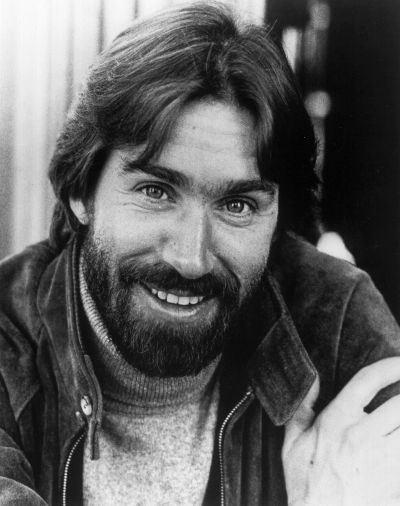
Dan Fogelberg - "The Innocent Age" (1981)

One of many albums in the collection I've found in a used record store or thrift shop, which had an interesting aura, the reviews on the web seem generally positive, so I've bought it. Of course, the price of most of these records is usually 2-3 dollars, so it's always worth a try. In this case, the risk didn't pay off, it's not an album in my taste.

Dan Fogelberg, hearing the name you might think he's Swedish, and the fact is that his father had a Swedish background  (his mother Scottish). He was an American, died in 2007 only 56 years old, in cancer. The Innocent Age, a double album, was his seventh studio album, and one of his most successful, it generated a number of hits in the US. The music is usually defined as soft rock and I would like to add country rock. It often sounds Eagles, lots of harmonies in the singing, and same kind of sound and songs. Emmylou Harris guest sings on one song, on another Joni Mitchell is in the background, Al Perkins often shows up on steel guitar, as well as a lot of other musicians on different instruments. In addition, the album has a cohesive theme in the form of life's different stages, from birth to death. Could be interesting, but no. Had I not read on Allmusic that the record had a theme, I probably wouldn't have understood it. Doesn't seem so clear in the texts.


Often, you'll find at least one song on records like these you fall for, which makes the purchase feel justified. Unfortunately, I don't do that on The Innocent Age, and it's simply because soft rock / country rock is not my thing. It sounds too cheezy and boring in my ears. If you like Eagles, or other bands dedicated to such music, surely this is a good album. It has an airy and clear sound. The songs, in their context, are of high quality. A double album, so you get many minutes of music. But nothing for me.


Tracklist

Side A
1. "Nexus" - 6:04
2. "The Innocent Age" - 4:15
3. "The Sand and the Foam" - 4:19
4. "In the Passage" - 6:28

Side B
1. "Lost in the Sun" - 3:53
2. "Run for the Roses" - 4:18
3. "Leader of the Band" - 4:48
4. "Same Old Long Syne" - 5:21

Side C
1. "Stolen Moments" - 3:12
2. "The Lion's Share" - 5:10
3. "Only the Heart May Know" - 4:09
4. "The Reach" - 6:30

Side D
1. "Aireshire Lament" - 0:52
2. "Times Like These" - 3:02
3. "Hard to Say" - 4:00
4. "Empty Cages" - 6:24
5. "Ghosts" - 7:16


Thursday, November 8, 2018

Dyani Temiz Feza - "Music For Xaba" (1973)

This is a somewhat odd bird in the collection. I don't have many jazz albums, and even fewer with free jazz, avant-garde jazz, fusion or whatever you want to call this. It's not music that's easily accessible initially. I got the album as a birthday gift from one of my wife's relatives, I thank her for the opportunity to broaden my horizons.

Johnny Dyani and Mongezi Feza come from South Africa but left the country in 1964, Okay Temiz comes from Turkey. They played all around the world with different artists in the 1960s, where the trumpeter Don Cherry (father of Eagle-Eye Cherry and stepfather of Neneh Cherry and Tityo) was a common denominator, as Temiz and Feza were members of The Don Cherry Trio for a number of years. In 1972, the three musicians formed the group Music For Xaba, they rehearsed for a few days and went out on a short tour in Sweden. They had gigs in Uppsala, Örebro and Stockholm. The record is a live recording from one of the concerts in Stockholm, at Teater 9, the 2nd of November 1972.


Dyani plays bass, piano and sings, while Temiz is the drummer and Feza plays trumpet and percussion. Different musical traditions meet in some kind of melting pot within the genre of jazz. There are four songs on the album. The opening song Idyongwana revolves around a drum rhythm in which song in form of  Za la ba la ba is heard on a regular basis. More and more rhythms are added during the course of the song. Here and there Feza plays on a conch, an instrument made of a large sea shell. An unexpected opening of the album. The second track Feelings is more pure free jazz / avant-garde jazz. The trumpet is played at a furious speed accompanied by drums and bass. Sometimes I can't figure out how they relate to each other, but I'm a rather inexperienced jazz listener. It feels like a song that demands a lot of the listener.

Side B opens with the slightly more accessible Traditional South African Songs, which one can say is a medley of different South African songs, with a clear jazz spice. Probably the record's most easily accessible song, which doesn't mean it's top of the pops. The last song Görans Söder brings the listener back to the land of free jazz.

An album that challenges, but also extends the width of the collection. Probably not for everyone, but if you like the free jazz and its creative explosions, it may be something worth checking out. An interesting mix of different musical traditions that meet in the land of jazz. Xaba means God, which Dyani explains in the text on the cover, is love. The trio released a second album in 1980, which I haven't heard.


Tracklist

Side A
1. Idyongwana 8.30
2. Feelings 12.50

Side B
1. Traditional South African Songs 9.33
2. Görans Söder 11.33


Monday, November 5, 2018

World of Dogs - "Real & Legendary Dogs" (2017)


Swedish music today, from my hometown of Uppsala, a record that was a gift from my brother on my birthday. The label that released the album is Excellent Spaces and was founded in Uppsala in 2015 by Sandro Colombo and Nils Hollmer, and they are also the artists behind the music on the record. On their website, you can order the music they have released from various musical projects they've participated in.

The album has been mixed by Gabriel Hollmer, and he is the son of the legendary Uppsala musician Lars Hollmer, among many things a member of the 70s progressive act Samla Mammas Manna, and who passed away a number of years ago. If Nils is a brother to Gabriel, or if they are relatives in some other way, I don't know, but both seem to have Lars' musical knowledge in their blood. Lars Hollmer played a lot of accordion, World of Dogs offers something else, maybe jazzy electronica, if one tries to summarize in a few words. On the net jazz is mentioned, as well as electronica, rock, drum n 'bass and personally I get some vibes of the 90's cool trip hop I listened to then. However, there is no rock n' roll, I don't know where Discogs got that from.


It's actually a great record, and I'm not saying that because I'm from Uppsala, or because it was a gift. It's instrumental straight through, and has an airy and light sound, a sound that makes it a very pleasant experience to listen to the album. No heavy vibes. Even the darker sounds that (rarely) visit the songs feel light, like a white, kind summer cloud. It's an electronic soundscape, in which a saxophone, played by Petter Nordblom, is visiting as the only analogue instrument. Some fine guitar playing is also heard along with the electronic beats. Sometimes I've thought it's a bit like an upbeat and happy Brian Eno.

The album has been released in 500 copies, so I'm guessing my copy is the only one that exists in Canada, maybe even throughout the whole American continent? If you happen to stumble upon the album, I can highly recommend it. A nice soundtrack for a day in the life.


Tracklist

Side A
1 Strength
2 Dexterity
3 Willpower
4 Charisma

Side B
1 Wisdom
2 Intelligence
3 Constitution
4 Luck


Wednesday, September 26, 2018

Eric's Trip - "Purple Blue" (1996)


Local music today, Eric's Trip originates from Moncton, New Brunswick, which is only 1000 km (620 miles) to drive from my home in Montreal. This was their third album, a record that I received on the latest Father's day from my family. Had never heard of the band, neither had my family, my wife and kids liked the cover, they thought it was a piece of art. Personally, I expected it would be quite druggy and experimental music, an idea based on the band name. I was wrong, Eric's Trip was the first Canadian band signed on the Seattle grunge label Sub Pop in the early 90's, which gives a hint of what it's all about. One of the few vinyl records from the 90's in the collection, although it's a reissue from 2018, on purple vinyl, indeed.


The first four songs are a kind of introduction, which gives definitive psych vibes, such as Mooseheart Faith Stellar Groove Band (a band name I like to drop, since almost nobody knows them). Lofi, murry sound, a kinda neurotic mood. But then the album starts for real. Not that the sound changes a lot. There's a lot of guitar and bass distortion, numerous songs wander between quiet, calm parts and thundering, noisy guitars. The singing is shared between Rick White and Julie Doiron, and personally I appreciate Julie's song more. You can hear some grunge in the music, which is not surprising, and bands like Nirvana and also Smashing Pumpkins flicker past in my head. Somewhat depressive and neurotic album, but here and there, especially Julie's singing brighten things up a bit.

Short songs makes the variation great. It's not an album that you instantly fall in love with, it requires a number of listenings to open up. But then you begin to understand why Eric's Trip was a relatively popular band within its genre, usually defined as alternative rock, I've noted online. If you like the Lofi sound with lots of guitar distortion, you can give Eric's Trip a chance. The band split up the same year this album was released, but apparently played some gigs thereafter as well.


Tracklist

Side A
1. "Introduction Into The ..., Pt. 1-4" - 8:13
2. "Hourly" - 2:47
3. "Sixteen Hours" - 3:05
4. "Universe" - 3:08
5. "Eyes Shut" - 1:37
6. "Alone and Annoyed" - 2:12
7. "Lighthouse" - 2:09

Side B
1. "Spaceship Opening" - 2:18
2. "Universal Dawn" - 3:32
3. "One Floor Below" - 1:40
4. "Now a Friend" - 1:54
5. "Soon, Coming Closer" - 3:37
6. "Not Yours" - 2:26
7. "Sun Coming Up" - 2:20
8. "Beach" - 4:14