Monday, October 10, 2011

Rare Earth - "Ma" (1973)


Rare Earth was formed in the early 60s, initially under the name The Sunliners. In the following years came and went a number of members and in 1968 they recorded their first album. The next year the band signed a contract with Motown under its new name, Rare Earth, and became one of the label's first all-white bands. Rare Earth was to belong to one of Motown subsidiary labels which had not yet a name, and the focus of this subsidiary label was exactly all-white bands. The people of Motown asked the band if they had any suggestions concerning a name for the label and they answered jokingly Rare Earth. To the band's surprise, Motown thought that this was a good idea and the label Rare Earth was born.


The band Rare Earth had a number of hits during the first years but the postitions in the charts over time became lower and lower. Motown then decided to take a stronger artistic control over the band's production and called in the legendary songwriter / producer Norman Whitfield for their sixth album at Motown - Ma. Norman wrote and produced all the songs, a couple of them together with Barrett Strong.

I found this album earlier this year in one of Quebec's shops for used vinyl records. The main thing that made ​​me curious about the group was the fact that I own a record with Sunday Funnies (see a previous post) which was released at the label Rare Earth. Since I like that album I thought the chance was pretty high that another band at that label also would be good, especially the band that gave the label its name! In addition, I liked the cover that almost can be called minimalist. Since I didn't have a record player in Quebec, this album had to wait quite a long time to be played by me, but he who waits for something good ... Right?


Side A consists of the song Ma and clocks in at just over 17 minutes. This is the album's peak, according to me. The song had previously been done by the Temptations and Undisputed Truth. A hypnotic groove takes the listener on a funky soul journey on the theme "mother". The groove is steady and doesn't change during the 17 minutes, but things are always happening in the song which help to keep up the interest. One time I found myself getting strong Hawkwind-vibes from an unusually spacy-psychedelic part in the song. Imagine that! The drummer Peter Hoorelbeke is the main singer of the band and has a classic raspy soul / funk voice with a lot of power.

The B-side is also good and offers more funky soul / rockn'roll. The album ends with the softcore song Come With Me in which a woman's voice is heard moaning in a way that can't be heard otherwise than very sexual. I would say that both Donna Summer (Love To Love You) and Jane Birkin / Serge Gainsbourg (Je t'aime ... moi non plus) are problably beaten here.

The album Ma is considered by many to be the band Rare Earth's best album. The band has continued to exist over the years with (as always) a large number of member changes. They still tour and released an album as recently as 2008.


Favorittrack
Ma


Tracklist
Side A
1. Ma 17:21


Side B
1. Big John Is My Name 4:06
2. Smiling Faces Sometimes 6:20
3. Hum Along And Dance 5:15
4. Come With Me 4:30


Friday, September 30, 2011

Rasa - "Setting the Scene" (1980)


On a visit in my early teens at Uppsala's classic second-hand store Prisfyndet (something like The Price Discovery) I had one of my many meetings with an album cover I thought was really interesting (=druggy and/or psychedelic). When I met such a cover and the price requested was right (low), I used to make a move. I always had the strong hope that the music would be as psychdelic as the cover. This was also the case the day I met Rasa's album Setting the Scene, the price requested was about one dollar. I had never seen an album with such a cover and was extremely curious about the music that was hidden inside. To connect the cover, which I assume represents a Hindu god, with the Hare Krishna movement, never crossed my mind. That the album was recorded at Korsnäs farm (Sweden) told me nothing either.

When I played the record later that day I heard music of a kind I hadn't heard before. It starts with a really nice groove where you hear wind instruments, odd drums, tinkling cymbals, etc. After a while the song starts in a language that's not Swedish nor English, problably it's Hindi (or Indish, as I thought as a teenager ). I was happy, surprised and also a bit disappointed. I had expected a rather psychedelic album with Western music (in retrospective maybe a somewhat strange expectation, given on the cover) but was instead given something completely different, something that was far away from the music on my other records in the collection.

Thanks to the Internet, I know now a little more about the album and artist Rasa. Behind this name is Harikesa Swami, also known as Visnupad. He was born as Robert Campagnola and was aguru in the Hare Krishna movement. He has participated in and produced 28 records, except as Rasa also as BLISS and Sri Hari.


On the record a lot of different instruments are used - saxophone, santoor, drums, congas, piano, bass, cymbals, organ, trumpet. Except Anders Eriksson (drums) all other musicians carry Indian/Hindi sounding names. If they are of Indian origin or if they are Swedes who have taken new names in the Hare Krishna movement, I do not know. The piano is given a pretty big space on the recording and some songs are quiet and calm while others are a bit more groovy. To define the music on the album is unusually difficult, it's like some sort of mix of Eastern and Western music, with an emphasis on the former. The arrangements are often quite grand with a relatively open soundscape.

The album is overall quite nice but after a while I get bored. Visnupad's singing sounds relatively similar from song to song and since I don't understand what he sings it becomes a bit boring. It's easy to lose concentration after a while, especially as the songs are relatively long and sounds quite similar. Nevertheless, I am happy and proud that this album is a part of my collection, and I think it's fun to have a record of Rasa and music on the Hare Krishna theme in my collection. The truth is that I liked the music and the cover enough to buy a whole bunch of other Rasa records (and yes, they were cheap), but more on that later.


It can be added that the Korsnäs farm is situated in Gröding, Botkyrka council (Sweden), and that the Hare Krishna movement have one of their temples there. It's the only Radha Krishna temple in Scandinavia.


Favourite song
The Son of Nanda


Tracklist
Side A
1. The Son of Nanda 7:11
2. Setting the Scene 13:38


Side B
1. The Master 6:14
2. Touchstone II 8:09
3. Shelter 7:17


Monday, September 19, 2011

Harmonium - "L'Heptade" (1976)


My post before last addressed the group Beau dommage, in that post I mentioned that my friend gave me two albums as a parting gift. L'heptade with Harmonium was the second of these, a classic according to my friend and a must-have in your record collection. The album is a double album, and many critics consider it a masterpiece and the most important album ever in the Quebecan music industry.

In 1972 Serge Fioro met Michel Normandeau in Montreal and formed a guitar duo. The following year the bassist Louis Valois joined in and the band Harmonium was formed. This was the time in history when a genuine music industry was born in the French-speaking province of Quebec and the trio got a contract with Quality Records. Their first eponymous album was released in 1974 and became a huge success. After a tour in the region, the band recorded their second album in 1975, Si On Avait besoin d'une Cinquième Saison (If you needed a fifth season), this album expanded the band's members to six.

The third and final album L'heptade was released the following year.


Some time after the release of L'heptade the members of Harmonium decided to dissolve the band and their last concert is considered to have been performed in 1978. The band's career was thus five years long and contained three albums (plus one live album). Many believe that they decided to quit at the top of their career which probably have helped to maintain the band's high status. Although the number of albums isn’t that great Harmonium is nevertheless considered to be one of the most important Quebecan bands ever, and their influence on the music and culture scene has been enormous.

L'heptade consists of seven "main tracks", the shorter parts between these songs exists primarily to bind together the album into a whole. The theme of the album is a day in a man's life in which he moves through seven different states of consciousness. It’s provided some clues to this on the LP, for example you hear a sigh from a man who wakes up and then steps over a wooden floor in the beginning of the album. At the end of the record you can hear this man preparing to go to bed. I must honestly say that although I have been listening for these details, I’ve never been able to hear them.


The main theme of the texts are internal conflicts taking place within the main character, often the texts are about the duality in the world - black and white, light and dark, day and night, etc. On the second LP (sides 3 and 4) it’s implied that only love can merge these opposites together. The singing is of course done in French as that language dominates the province of Quebec.

This record is one of the most popular ever in Quebec's musical history. However, it had at the time of the release not much impact on the local music scene, mainly because the LP doesn’t contain any radio-friendly hits. Especially in circles of progressive music the album was greeted with open arms, also outside Canada, and Harmonium was for example invited to tour with Supertramp in Europe.

The cost of the recording was 90,000 dollars which was a new record for an album from Quebec. A lot of this was paid through a new contract with CBS, but the musicians in Harmonium also had to help paying from their own pockets. The album was recorded in a cabin in the countryside that belonged to the Fiori family and, apparently, we can hear cracks from the floor on the album (although I missed this, too).


I think this is undoubtedly the best of Harmonium’s three albums. A, according me, positive difference compared with the first two albums is that the band uses drums here. This was missing on the initial records, which made ​​the music on these more ambiguous and fluid (in a negative way). It is a solid album of high quality and although it’s considered to be Harmonium's most progressive album, I think it’s the most accessible and enjoyable one. It’s also a more varied album than the previous ones, which makes it more fun to listen to. This was a nice parting gift from a good friend and I can’t do anything else then to recommend a purchase. And also a visit to Quebec, a very nice part of the world.

Tracklist

Side A
1. Prologue (4:20)
2. Comme Un Fou (7:50)
3. Sommeil Sans Rêves (1:25)
4. Chanson Noire (8:12)
I) Le Bien, Le Mal
II) Pour Une Blanche Cérémonie


Side B
5. L'Appel / Le Premier Ciel (11:12)
6. Sur Une Corde Raide / L'Exil (12:54)


Side C
7. Le Corridor (8:10)
8.
Les Premières Lumières / Lumières De Vie (14:11)
I) Lumière De Nuit
II) Eclipse
III) Lumière De Jour
IV) Lumière De Vie


Side D
9. Prélude d'Amour / Comme Un Sage (14:03)
10. Épilogue (2:52)


Thursday, August 25, 2011

Contrevent - "Jeu de Paume" (1985)
Contrevent was the theme a couple of weeks ago, and today I take a look at their first album, Jeu de Paume as my Quebecan theme continues. The album's title refers to an old French ball game that resembles tennis a little bit. Readers with a good memory may recall that Marc Vallée, the founder of Contrevent and its principal composer, gave me two records as a parting gift when I returned to Sweden from Quebec. Jeu de Paume was the second of these, and this one was also unopened. When I last night cautiously opened the plastic that enclosed the LP and let it out to taste the world it was almost like giving birth to a baby. (Yes, now I think I know how it is to be a woman).

It was then a very special feeling to put the LP on the turntable, knowing that it had been enclosed in its packaging for 26 years and never felt the sharp tip of the pickup. This was a moment to remember. I think the LP was happy to finally spread its sound across the universe and losing its virginity. Maybe it was disappointed that it was beig played at a cheap Pioneer amp and an even cheaper Sony turntable, on the other hand, it had nothing to compare with.

The music on Jeu de Paume is hard to define. Contrevent consisted of five members who played bass, guitar, drums, cello and vibraphone (Marc was responsible for the guitar) which means it's a special and unique sound. All the songs are instrumentals and I experience the music as very gentle. The cello, the vibraphone, and (usually) an acoustic guitar create a soundscape that's relatively soft. Marc Vallee has composed all the songs, except D'eau which François Beausoleil has written, but just like on the album Youkali Marc is in no way dominating the album. On the contrary, I would say that if any instrument often is dominating it's the cello or the vibraphone. I think this shows Marc's humility as a musician and as a human being, which also is the impression I got from him on a personal level. It also suggests that it was the music that was in focus for Marc during his time in Contrevent, not being the star. The song L'Inachevée gives us the honor of hearing Marc perform a song by himself, though.

There is no doubt that the members of Contrevent were all very talented musicians, and some of them have had a continued musical career. If someone forces me to define the music perhaps it would be jazz-prog-world-fusion, which of course is a perfectly clear term. An alternative term could be progressive elevator music, as it's pretty easy going but at the same time fairly complex. It is a diverse album with many good songs. As mentioned the sound is quite gentle and no one will be provoced by what is heard. However, I think many may be impressed by the songs and the musicians' skills.

It may be mentioned that the Jeu de Paume was the only Contrevent record as drummer Michel Dufour participated on. In the following Youkali he was replaced by Charles Paradis.

Today Marc composes a lot of music for plays and television productions in Quebec, he is also a member of Beatles Baroque, an ensemble that plays Beatles songs on classical instruments. They perform regularly in North America. He has also released an album with Marc Vallée Trio. The ones interested can read more on his website http://marcvallee.ca/marc_vallee/welcome.html

Conclusion: Jeu de Paume is another album from the city of Quebec that can be recommended. I am very pleased that it is part of my collection. Congratulations to those who find it!


Tracklist
Side A
1. Acoustifunk 3:30
2. Jeu de Paume 6:40
3. L'Inachevée 7:00

Side B
1. Crème de Menthe 4:19
2. La Chanterelle 4:50
3. D'eau 4:15
4. Brum et Glace 5:06

Friday, August 19, 2011

Flag Theme Quebec 


Beau Dommage – ”Beau Dommage” (1974)

beau dommage.jpg

I’ll continue my theme on music from Quebec, today the region rather than the city. As in my last post, the emotions connected to this LP is more important than the content, even though the content is really good.

When I arrived in Quebec city in the summer of 2009 I knew no one, I had neither relatives nor friends. Since my life was staying at home with the kids, I had no colleagues to hang out with. All I had as adult company was my wife (and we all know how exciting that is).

In September my son started school and I picked him up on a daily basis at 3 o'clock p.m. After a while I started talking to a woman who also picked her son up every day, a boy who had started to play with my son in the playground after school. Every day we stayed in the playground for an hour and talked about this and that. It was a very friendly woman, and sometimes her partner showed up and picked up the son. He was a teacher and never worked later than 1.00 p.m., and he worked only four days a week (yes, that’s how it is to be a teacher in Quebec). To make a long story short, me and this man began to hang out and he became my best friend in Quebec. Countless times we have played soccer or ice hockey with our sons in the park and discussed various important issues. Since he, in addition to being a teacher, also was a musician, music was a topic that often came up. He teached me a lot about Quebecan music.

After two years had passed, it was time to say goodbye to the city and its people and return to Sweden. At this time, I felt a connection to the city of Quebec and liked my life, so this farewell meant some sad feelings. On one of the last days in town my friend gave me a parting gift in the form of two vinyl records, since he knew I had an interest in those. Beau dommage was one of these records, a classic Quebecan LP you had to bring home, according to my friend. He described the album as the music all the hippies in Quebec listened to. I wonder why he thought I should own a record like that?

beau-dommage2

Beau dommage is an old expression from Quebec and corresponds to absolutely in English. Pierre Huet and Michel Rivard started the art group Quenouille Bleu in 1970, the site was the University of Quebec in Montreal. Robert Léger then joined, and later Pierre Bertrand, Réal Desrosiers and Marie-Michèle Desrosiers at different times during the first two years (in 1975 Michel Hinton joined the band). In 1973 the name was changed to Beau Dommage. The album Beau Dommage was the band’s debut album and hit sales records, it also gave them the Jeune Chanson prize awarded in Cannes. They had a serie of hits from the album and the band sold more than any other Canadian band during the years of the mid-70s. The debut album, for example, sold 250 000 copies. It can be added that the follow-up sold platinum on the day of its release which was the first time this happened to a Canadian band.

The band of course toured in Canada, but also a lot in Europe. 1978 Beau Dommage broke up since some members wanted to focus on their solo careers. But in 1984 they returned and did two concerts with a subsequent live album. 1994 they were reunited once again and made a new album with the same name as the debut album. They then carried out a tour in Quebec 1995.
They are today regarded as a legendary band in the region of Quebec.

BD4

The music is very Quebecan, I think, and I recognize a lot of it from more modern Quebecan bands. It is easy to hear how bands like Beau Dommage or Harmonium has affected the music scene in Quebec, the echoes from these bands can still be heard in much of today’s music. Of course the French language puts its mark on the music but the sound is pretty typical, too. One thing that is often heard in Quebecan music, as on Beau Dommage, is the nylon stringed acoustic guitar that gives the records a rather soft and gentle sound. On Beau Dommage the songs are quite often sung in beautiful harmonies, usually in major. Yes, overall, the songs on Beau dommage are quite nice and soft, there are no neurotic anxiety-filled nightmares that are offered. Yes, maybe it's hippie music, what do I know? I like this album anyway – there are beautiful songs, I can train my French and the music reminds me of two nice years in a different part of the world. For those who are curious about music from Quebec I really recommend this album.

BD3

Tracklist

Side A

1. Tous Les Palmiers 3:20

2. À Toutes Les Fois 4:17

3. Chinatown 3:05

4. La Complainte Du Phoque En Alaska 5:15

5. Le Picbois 3:25

Side B

1. Harmonie Du Soir À Chateauguay 3:06

2. Le Géant Beaupré 4:02

3. Ginette 2:35

4. Ung Ange Gardien 2:56

5. 23 Décembre 2:14

6. Montréal 4:44


Monday, August 1, 2011


Theme of the month: Quebec
As a tribute to the city where I have lived for the past two years, but now have left.


Contrevent - "Youkali" (1989) 
Some albums in the collection have a higher value than others, usually this is not about the musical quality of the record. Maybe it’s some kind of rarity, it might be a record you've been looking for a long time, you may have received it as a gift from someone special or the music might be associated with some special event - that adventurous summer 20 years ago or the winter your first child was born. It’s an emotional value you give the record, something that often is more important than the music itself.

This is such a record. It has been in my collection just over a month, and just like when you look at your one month old baby the same feelings of warmth, joy and pride arise. "I can’t believe I have this album in my collection ...."

I have the past two years live in the city of
Quebec, Canada. These years were very special, they were a departure from my regular gridded life and instead I got to spend time in a new country with a new language and new, friendly people. In addition, I took a break from my job and spent two years at home with our youngest daughter who was ten months old when we arrived in Quebec. Two special years that brought me closer to both my daughter and my older son, but also resulted in exciting new friends.

One of these new friends was the neighbour I had in the apartment above the first year. His name was Marc Vallée and he was a musician. A very friendly man who it was always nice to talk to. Usually we met in the street when he took a bike ride or when we both were going somewhere on foot. As a musician, he had a lot of exciting knowledge and thoughts about music and different bands, and often we discussed these topics.

A few days before I returned to
Sweden he invited me to his apartment and we went through his very interesting vinyl collection. I must admit that his collection in both quality and quantity beats my own and it was a whole bunch of records that I jealously noted should be a part of my own. As a farewell gift, he gave me two records of which Youkali was one. This gift made me very happy and warm inside and without even listening to its contents it had immediately a very special place in my collection. And my dear friends, the record was sealed and still is. This may be my most important economical investment so far.

Why did Marc give me a sealed copy of Youkali with a band called Contrevent? Why did he own such a record? The answer, dear readers, is that he owned several, Marc was the founder of Contrevent and the principal creator of the band’s music.

Marc created Contrevent while he was studying music at the Université Laval in Quebec, the other members were fellow students to him. The first album was released in 1985 and the third and final in 1993. It’s always difficult to define music but Contrevents music is defined in different internet sites with words like fusion, jazz and progressive. Marc himself thinks the music leans more towards jazz-fusion than progressive.
Youkali was the band's second album and the music is very unique since the band had a rather unusual crew with cello, guitar, drums, vibes and bass. This gives a very special sound with interesting touches of musical spices. The instruments used might remind you of Gentle Giant but the music is generally a little more accessible than GG's creations. However, the musicians in Contrevent (just like in GG) are very talented and virtuosos on their respective instruments. The album is mostly instrumental, a female vocalist can be heard but the song Trapézoïd.

The record has a fairly timeless sound and could probably have been recorded today. When I listen to it, I get the feeling that it was great fun for the musicians to create the music. Although Marc has written most of the songs a lot of room is left for the other musicians. We hear both vibraphone and cello solos, in addition to Marc's guitar. I would even say that the guitar in no way dominates the sound, but that the responsibility is nicely divided between the different individuals in the band.

Some of you might wonder how I could have listened to a still sealed record. The answer is that Marc was kind enough to also give me an (unopened) CD of Youkali. This one I have opened and let my stereo do its work on it. The vinyl can remain unopened and thus continue its existence in mint condition.

A detail in this is that the song order on the vinyl is different than on the CD. Marc explains that someone at the record company thought, when it was time to release the album on CD, that a changed song order would get the record to sell better. This man had the idea that the record would "grow" - it would start to calm and slowly increase in tempo. In other words, the more fast-paced songs were saved to the end of the CD.

Initially, I mentioned that a record can hold various emotional factors, Youkali has many of these. It was given as a gift from a friend in
Quebec and is a reminiscent of these special years. It is also something of a rarity because it’s almost impossible to obtain. Furthermore, the content is really good which increases the value further. In conclusion, this is a record I’m very happy and proud to own. It can be hard to come by but if someone succeeds I say congratulations. I highly recommend Youkali to all.

Marc Vallee has his own website:

http://marcvallee.ca/marc_vallee/welcome.html

The section on his website about Contrevent:
http://marcvallee.ca/marc_vallee/Contrevent_english.html

I did an interview with Marc, which was published on the blog UniversumNoll.com:
http://www.universumnoll.com/2011/05/marc-vallee-svarar-pa-9-fragor.html


Tracklist:
1. Mallorca (7:43)
2. Mémoires de perles (6:59)
3. Youkali (5:03)
4. Café noir (3:11)


Side B
1. Une main qui se pose (3:42)
2. Anti-statique (3:23)
3. Le Bois de la Cambre (3:25)
4. Trapézoïde (7:39)


Line-up / Musicians
Marc Vallée / guitars, synth, piano
François Beausoleil / Vibes, Kat, Perc
Russell Gagnon / cello
Gerard Paradis / bass, contrabass
Charles Paradis / drums


Thursday, July 14, 2011

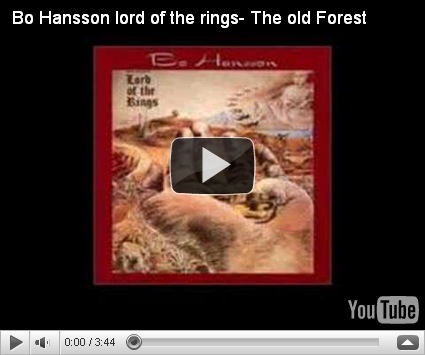
Bo Hansson – ”Music inspired by Lord of the Rings” (1970/1972)

Bo_Hansson-Lord_Of_The_Rings

When I as a child and teenager looked through my parents' vinyl collection, it could be difficult to find something that would interest me. But every now and then I encountered a surprise. This album was one of those. I don’t really know why my mom or dad bought this album because it’s not what they would normally listen to, maybe it was a gift, but it gave me an experience of music that was very different from what I had previously heard.

Bo Hansson was in the late 60s half of the Swedish duo Hansson & Karlsson, where Karlsson was the drummer Janne "Loffe" Karlsson. They recorded several CDs together and their yet unreleased jams with Jimi Hendrix have a mythical status. The duo dissolved in 1969, and Bo Hansson began a solo career.

Inspired by Tolkien's books, especially the Ring trilogy, Bo borrowed a friend’s apartment and began recording demos for what would become Music Inspired By ... When his friend after some time returned, he discovered he had been evicted from the apartment due to numerous complaints by the neighbours concerning noise from the apartment. As studio time was far too expensive Bo went out to a cabin in the Stockholm archipelago. There he continued the recordings along with drummer Rune Carlsson and producer Anders Linder, who had just started the record label Silence Records. They used a four-channel tape recorder but Anders was able to borrow the only eight-channel tape recorder at that time in Sweden (at the Swedish Radio) by claiming that he was thinking of buying one and wanted to test it. He also persuaded a couple of session musicians at the Swedish Radio to contribute to the recordings.

The final recordings were made in 1970 at Studio Decibel, and that year the album was released in Sweden. It had a different cover than the one you see above, my parents had this original version (but now it’s either at my or my brother’s place).

Sagan om Ringen
In Sweden the LP got the name Sagan Om Ringen which is the Swedish name of the Tolkien trilogy (which translates to The Tale of the Ring). The album got Tony Stratton-Smith's attention, the owner of the English record company Famous Charisma, and he released the LP internationally 1972. It then got a new cover and the name of the album was also changed as Tolkien and his publisher didn’t allow the album to have the same name as the book, hence the addition Music Inspired By ... In addition, they said no to Bo's desire to have vocals in some songs.

The music on the album is hard to define, it has a sound of the early 70's and personally I get a vibe of early Pink Floyd. This is because I hear some similarities with Richard Wright’s keyboard playing and Nick Mason’s drumming. However, it should be clarified that the music is still relatively far from Pink Floyd's creations.

The album is instrumental and has a really unique sound, but when I as a child and teenager listened to it I had a hard time with it. The complaining guitar, the organ, the drums, the Moog synth creates a desolate world. Maybe it's Mordor I see before me? A fairy-tale world of misty moors, dark mountains and a gray sky. I was always a little uneasy when the LP spun on the turntable.
Today I feel better about the record even if some feelings from my childhood remain. I don’t know if Bo had any thoughts about what feelings the music would provoke, but to me it’s still a relatively dark and mysterious album. It does not make me light hearted and easy-tempered, so to speak. At the same time I’m impressed by the music and I believe it must have been a great time in our history when music like this could get a lot of air time on the radio.

The album has a solid position in the music history, both nationally and internationally, and is considered to be a milestone in the progressive genre.

Finally, I may add that this album was supposed to be Silence Records first release but Gudibrallan got there first with the album Ut I Vår Hage. Bo Hansson passed away in 2010 after a life largely lived in anonymity.


Tracklist

Side A

1. "Leaving Shire" – 3:28

2. "The Old Forest & Tom Bombadil" – 3:43

3. "Fog on the Barrow-Downs" – 2:29

4. "The Black Riders & Flight to the Ford" – 4:07

5. "At the House of Elrond & the Ring Goes South" – 4:40

Side B

1. "A Journey in the Dark" – 1:10

2. "Lothlórien" – 4:01

3. "Shadowfax" – 0:51

4. "The Horns of Rohan & the Battle of the Pelennor Fields" – 3:57

5. "Dreams in the House of Healing" – 1:56

6. "Homeward Bound & the Scouring of the Shire" – 2:54

7. "The Grey Havens" – 4:57