Tuesday, January 31, 2017

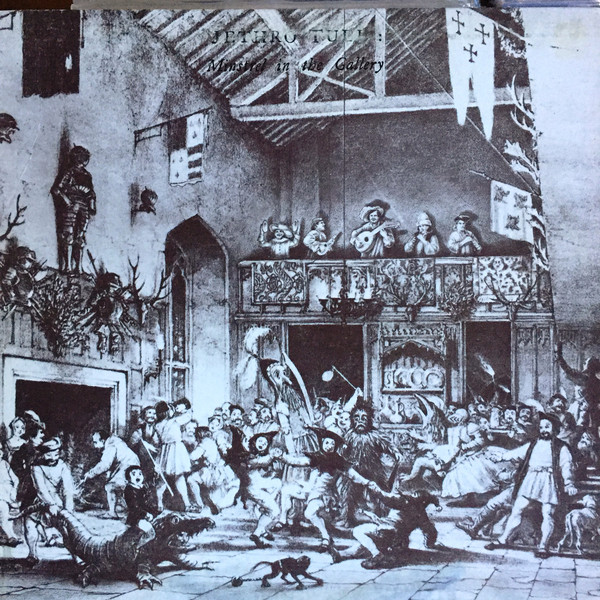
Jethro Tull - "Minstrel In The Gallery" (1975)


All the way into adulthood, I thought Jethro Tull was one of those bands whose name tough guys spray painted on walls. Black Sabbath, Iron Maiden, Venom ... and Jethro Tull. The name sounds pretty tough, a band you don't want to mess with. Now, this wasn't completely consistent with reality, and I think I actually never read "Jethro Tull" in big, black letters on a brick wall. But there was something in the name that seemed hard, and surely the band members had long hair, and there's certainly an element of hard rock in the music.

I'm no connoisseur of Tull's creations, in my collection you'll find, in addition to today's theme, only the classics Aqualung and Thick as a Brick. Minstrel in the Gallery is at least as good as Thick as a Brick, and a lot better than (the somewhat overrated?) Aqualung. The band offers almost everything you could wish for, hard rock n' roll, mellow tunes a la Cat Stevens, and long instrumental pieces with elements of both British folk music and medieval tunes. And a song over 16 minutes as the icing on the cake. What is it not to like?


I've always liked the flute in contemporary music, be it progressive rock, pop or heavy metal. Wherever you find it, it raises the mood a notch. The singer Ian Anderson also like the flute, and he offers it a lot which is nice. It makes it hard to dislike Jethro Tull.

For a long time I was confused regarding the cover design, as one side is turned up side down. But then I read that this is so you can turn the cover around from top to bottom, vertically, instead of side to side. Of course.


A real good album that can be recommended, it offers a lot. Should I be somewhat critical, I think sometimes Tull's sound is a bit too stripped down and raw. It often sounds quite rough, as if you're in the rehearsal space, which is probably their wish. Not really to my taste, however. Cold Wind To Valhalla a good song, but after having seen Jack Black too many times ecstaticly shout how he's going to ride the snake to Valhalla, I have some difficulties taking the song seriously.


Tracklist

Side A
1. Minstrel In The Gallery 8:09
2. Cold Wind To Valhalla 4:17
3. Black Satin Dancer 6:51
4. Requim 3:41

Side B
1. One White Duck / 0^10 = Nothing At All 4:35
2. Baker St. Muse 16:40
- Pig Me And The Whore
- Nice Little Tune
- Crash-Barrier Waltzer
- Mother England Reverie
3. Grace 12:37


Sunday, December 11, 2016

Barde (1977)


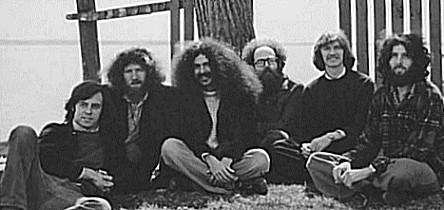
Local music today, from Montreal. Barde means bard, someone like Cacofonix, you know, in Asterix. The band formed in 1973, and today's album from 1977, was their record debut. They were six members in the band, originating from Quebec, Ireland and the US. Accordingly, they sing in Irish, French and English. The music they played was a mixture of Celtic, Scottish and Quebecain folk music. They made three albums, before they went their separate ways in 1983. They toured extensively and apparently their concerts were legendary, an explosion of ecstatic energy, where the use of dual Celtic fiddles was their hallmark.

Personally, I hadn't heard of Barde before I found this album in a record exchange. I bought it thinking it would be fun to expand my collection's number of albums with local music, as Montreal is my new hometown. And they say that you should learn about and embrace the local culture. The fact that the album cost 1-2 dollars made it quite easy.


I've always appreciated folk music from different parts of the world, but the Celtic / Scottish music has never been a special interest of mine, so I'm quite ignorant of the genre (I have some records with Dubliners and Relativity, but beyond that my collection is empty) . It's pretty fast-paced music, lots of violins, and as a former violinist I can find myself daydreaming about how it would have been if I had continued my violin career, and if I had found myself in a group of whiskey-fueled Irishmen. It would probably had been fun. The album offers both instrumental tunes and the ones with song, where the former are a majority. As mentioned, it's sung in three different languages. You'll hear only traditional instruments, without the interference of modern electronic ones (they appeared on the later albums, though). The opening song Jack McCann is written by the band, the other ones are traditional compositions.

An OK album, with a lot of energy and upbeat songs, and it might spin now and then on the turntable, when inspiration strikes. When it comes to this type of folk music, I personally appreciate a band like Fairport Convention more, where the traditional songs are spiced with a more modern sound. However, the lover of Keltish / Scottish / Quebecain music will appreciate this album a lot, no doubt.


Tracklist

Side A
1. Jack McCann 3:02
2. Julia Delaney 2:43
3. L'île Noire 3:35
4. La Queue De L'Hirondelle 3:30
5. Le Violin Accordé Comme Une Viole 2:17
6. Fanny Power 3:33

Side B
1. La Gigue The George Brabazon 1:38
2. Les Trois Hommes Noirs 5:28
3. La Suite Du Cap Breton 3:29
4. Banshee 3:57
5. P Stands For Paddy 4:54


Friday, December 9, 2016

Niels Jensen - "Rum" (1983)


Once in my teens, I heard a song on the radio I liked with the Swedish artist Niels Jensen. Some time later, I found Rum (=Room), in a shop in my hometown of Uppsala for maybe a dollar. The logical conclusion "a good song on the radio probably means a good LP" made me buy it, although of course I didn't know if the song I'd heard was the on the album. Sure, the price certainly also contributed to my purchase. Back home, I realized quickly that my logic was not fully developed. I had difficulties with the album.

The first time I encountered Niels Jensen was in the movie Sova Räv (Sleep Fox) which I saw on TV, during a summer break up in northern Sweden at my grandparents. As I recall, a pretty heavy movie, with absent parents and violent death. It made an impression on me. Otherwise, as an actor, Niels is probably better known in Sweden from the movie G - som i gemenskap (G - as in community, which in English I guess would be C - as in community). He's an artist with many talents, and as I understand it, it's primarily as a visual artist he has mostly created, although his ventures into acting and music perhaps is what most people in Sweden associate him with.


As a 15-year-old Niels got a hit with the song Mobbingbarn (Bullied/Bullying Children), and was just 19 when he made Rum. It's impressive in its own way, I could not as a 19 year-old nor a 40-year-old write music, much less something a record company would release. But the music is not really to my taste, not then nor today. The sound is very dated, it sounds way too much the 80s. No matter how good the songs might have been, the sound ruins the experience. As a teenager, I had also difficulties with Niels' southern accent and his somewhat unpolished singing voice. After as an adult having lived many years in southern Sweden, I am friends with dialect nowadays, but not with the voice.

Also, the album is loaded with anxieties and a neurotic atmosphere, which makes it painful to listen to. The opening lines on the album Mitt namn är Klaustro, jag har fobi, jag söker rum att leva i (My name is Klaustro, I have phobia, I'm looking for room to live in) immediately sets the tone of the record. The album cover and its (according to me) shitty sound enhances the feeling of angst. Now, all songs are not teenage anxiety filled, some you can sing along to and has quite catchy choruses, like Businessman for example. But it's then that 80's sound comes in and still makes it less than good. It's a rather theatrical alum, where Niels sings with passion, a bit like Van der Graaf Generator maybe (although there are many other things that separate them).


On Youtube I could only find videos from a classic Swedish music show from the 80s, Måndagsbörsen, where Niels sings some of the songs live. An interesting historical document, and since I obviously can sing along to most of the songs, I must have listened to the album quite a lot in my youth. I guess hadn't many albums to choose from.


Tracklist

Side A
1. Klaustro Von Fobi 3:28
2. Businessman 3:48
3. Paradis Nu 2:55
4. Iom Mig 3:30
5. Vargkvinna 4:15

Side B
1. Instant-Instant 4:18
2. Riktig Vän 3:45
3. Self-fish Saw-Fish 3:20
4. Julia 4:14
5. Rum 4:33


Wednesday, December 7, 2016

Cream - "Disraeli Gears" (1967)


Some blues and a lot of psychedelia, is a fitting description of Disraeli Gears. If you want a visual representation of the music, just look at the cover. I think it fits unusually well to the music. A fat psychedelic sound that compels the most rigid to expand their mind. Consider then that the songs are created by the super trio of Eric Clapton, Ginger Baker and Jack Bruce. Of course it can't be anything but good.

The album was recorded in just over three days, which with today's recording standads must be considered somewhat sensational. At the time it was more common for records to be recorded faster, but even then three days must have been considered a short time in the studio, especially for a famous band as Cream. This was the band's second album and was a clear departure from their blues-based roots. Outside Woman Blues and Take It Back on side B offer the most pure blues, which also happen to be the songs I like the least, the rest of the songs are dominated by a more psychedelic sound à la 1967. Sure, you can say that the sound is dated, but one can say that about a lot of great music from the past.


As I use the description "psychedelic" considering the music, I should clarify that the album doesn't belong to the genre e.g. Pink Floyd's mental excursions from this time, involving long, strange jams, mysterious sound effects or epic 10-minute suites, rather Disraeli Gears is blues-based psychedelic rock n' roll, guitar-bass-drums, with 3-minute songs you stamp your foot to. I found my copy here in Montreal for a cheap price, since the store owner claimed the album was a bit worn, which wasn't really true. It's in absolutely acceptable condition, maybe we have different ideas of what is acceptable quality.


Tracklist

Side A
1. Strange Brew 2:46
2. Sunshine Of Your Love 4:10
3. World Of Pain 3:03
4. Dance The Night Away 3:34
5. Blue Condition 3:29

Side B
1. Tales Of Brave Ulysses 2:46
2. Swlabr 2:32
3. We're Going Wrong 3:26
4. Outside Woman Blues 2:24
5. Take It Back 3:05
6. Mother's Lament 1:47


Tuesday, December 6, 2016

Brian Eno - "The Ship" (2016)


Eno has been around a while, first as a keyboardist in Roxy Music in the early '70s, then a solo career and great success as a producer. I don't know how many records he's participated on over the years in some form, but they are many. Somewhat surprising then that he this year creates one of the best and most interesting albums he's made during his career. According to a review I read, his 25th solo album.

The Ship has a connection with Sweden as the music began as a 3D sound installation in Stockholm. When Eno discovered that age had made his voice deeper, and that he therefore could sing deeper tones, The Ship turned into a stereo album, where Eno uses his "new", deeper voice in parts of the singing. The album consists of two songs, the title track, which clocks in at just over 21 minutes and the suite Fickle Sun, which consists of three parts, of which the first is just over 18 minutes, and the two remaining approximately three and five minutes.

Eno's installation The Ship in Switzerland

The title song has the Titanic as its theme, but it's not a dramatic tragedy that's being played, rather the song creates a picture of a ship that calmly flows through a dark fog on calm water. Deep synthesizers and various sound effects place the listener in a quiet, dark world. After several minutes, Eno starts singing, which almost resembles monks chanting. It's peaceful and beautiful. The song continues in a rather structureless shape, there is no verse-verse-chorus structure, but the song absolutely creates a comprehensive whole. During the second half of the song, Enos deep chanting is replaced by other forms of voices, both his own and others, which continue to create a dark, but pleasant atmosphere. The song The Ship is an impressive creation, despite a low tempo and not really a great variety, every minute is interesting and enjoyable.

The first part of Fickle Sun continues in one way within the same frame, it's Eno's voice together with the soundscape he creates with his musical instruments. The theme is World War I, and the song is a bit more dramatic, but just as good. Fickle Sun offers a bit more variety, where the song has somewhat more clearly a couple of different parts. Eno doesn't use the same deep voice, but more the one heard on earlier albums. Also this song lacks the verse-verse-chorus structure, instead it is a soundscape being created. I experience the atmosphere as fairly calm and pleasant, although there is a relatively large difference from the tranquility on The Ship, as there is more dissonance, and sometimes it feels like Eno paints a picture of one of the circles in Dante's inferno in Fickle Sun (I).


In the second part of Fickle Sun, you'll get a brittle piano playing in a classical Eno ambient manner, and Peter Serafinowicz reciting a text to it. The more minimalist sound is in contrast to the first part of the song. This part continues into the third and final part of the song, which is a cover of the Velvet Underground's I'm Set Free, a beautiful pop song in Eno's hands. The closure is very different from the rest of the album, but still somehow feels very right.

I guess this would be an ambient album, although it's not easy to define the music. Actually, I see it as a piece of art, which should be more experienced than defined. It's impressive that Eno manages to create something completely different from what he has previously done (at least of what I've heard with him), while at the same time it feels so naturally that it was he who made this album. He manages to combine his singing with his creation of soundscapes, so it actually is among the best he's ever done.


Tracklist

Side A
1. The Ship (Part 1) 13:45

Side B
1. The Ship (Part 2) 8:07

Side C
1. Fickle Sun (I) 18:03

Side D
1, Fickle Sun (II) 2:50
2. Fickle Sun (III) I'm Set Free 5:18


Friday, December 2, 2016

Brian Eno - "Small Craft On A Milk Sea" (2010)

I just bought this record a few weeks ago, the price was so attractive I couldn't resist (half the price of an already reduced price). It was the nice box containing the music on vinyl (on two records), CD (two discs, of which one consists of four bonus tracks), a digital download and a lithograph created by Eno. A beautiful box, even if it was a little dirty, and the download code had already been used (the staff in the shop? Was it a used item? The code too old?).


The album is a collaboration with Jon Hopkins and Leo Abrahams, and is based primarily on improvisations they'd done together, inspired by film soundtracks. Five of the songs were actually written for the film The Lovely Bones, but were rejeccted. On the album we hear the classic Eno, meaning his ambient creations. The initial songs are beautiful pieces one can recognize from his previous ambient records, such as Music For Films. Atmospheric, relatively formless and soothing. Then the record changes direction into a more action-packed and loud path, where rhythms, guitars, louder synthesizers dominate, before it returns to and finishes with calm, ambient pieces. It can be mentioned that the album is instrumental.

Personally I like the quieter and atmospheric pieces a lot better than the louder ones. I'm calmed by the mood the songs create, activities like emptying the dishwasher or cleaing the house suddenly become pleasant and invite you to reflection. The louder pieces have an opposite effect, I get stressed and they border too often to noise. But a musician might think they are more fun to play, what do I know.


In other words, I like half of the album, while I have a harder time with the other half. The sound is timeless and probably sounds as good today as in 30 years (and could have been recorded 30 years ago). People who like Eno and his ambient albums, probably like Small Craft On A Milk Sea. One could argue that the album is not really necessary if you have some of his previous records, as it is to some extent more of the same. Personally, I can sit for a while and listen to Eno's atmospheric pieces, but after a while I also need to do something else, since I can get a bit bored of simply listening to the relatively formless pieces of art. But whatever you do then, cleaning the house, yelling at the kids, smashing down a wall, it will be done with a sense of calm and thoughtfulness, thanks to the filter the ambient pieces puts on the reality. The louder pieces might intensify your rage, though.


Tracklist

Side A
1. Emerald and Lime 3:02
2. Complex Heaven 3:05
3. Small Craft On A Milk Sea 1:48
4. Flint March 1: 155

Side B
1. Horse 3:01
2. 2 Forms Of Anger 3:14
3. Bone Jump 2:22
4. Dust Shuffle 1:54

Side C
1. Paleosonic 4:25
2. Slow Ice, Old Moon 3:25
3. Lesser Heaven 3:20
4. Calcium Needles 3:24

Side D
1. Emerald and Stone 2:12
2. Written, Forgotten 3:55
3. Translate Anthropocene 7:54


Bonus songs on the second CD:
1. Surfacing 2:19
2. Square Chain 2:36
3. Bimini Twist 3:13
4. Ship Abandoned 3:45


Wednesday, November 30, 2016

Big Brother and the Holding Company - "Cheap Thrills" (1968)

Just the cover designed by Robert Crumb makes this album worth buying. It was actually to be the back of the cover, with a portrait of Janis on the front, but she thought it was such a cool picture that it became the cover. From the start, the band had thought a photo of themselves naked in a bed would be the cover, but the label thought for some reason differently.

Janis, yes, this was her big break when she became Janis Joplin with the whole world. This was the band's second album together with her, and the last, as she later began her solo career. Already then most people felt that she was the big star, and that the band was merely a backing band for her. Many also complained that the band members' musical skills left some to be desired. In other words, everyone was only waiting for her to embark on her own adventures. But they were still a band when Cheap Thrills was released.


The album starts with Bill Graham introducing the band to an audience's noise. Sound from an audience is continued to be heard on the album, and many thought it was a live album. But it was not, it was only sound added to create a live atmosphere. The last song Ball and Chain is the only one recorded live. Rest of the album was recorded in a studio New York. This became one of 1968 year's best selling albums.

When I was younger I didn't like Janis. At that time I didn't know that she was actually a member of a band a time of her career, she was so dominant in the listening experience. I thought her voice was too hoarse. And I wasn't, and have never been, a blues man of rank. Today, I have changed my opinion on Janis. Today, I think her voice expresses so much emotion. A unique voice. But it's not always working for me. Sometimes her voice, together with the band, becomes too loud and noisy. My wife usually complains when the album is spinning on the stereo, since it is so loud, and she lets out a sigh of relief when it's over. The album is a full of (Janis') feelings, which requires some emotional involvement of the listener. To sing with the passion she does have to tear hard on the vocal cords and make you emotionally drained. At least it feels that way when you hear her. It's not as if she sings half committed.


The best songs I think are the covers, which are also the songs that became the biggest hits and therefore the most well known. Summertime, Piece of My Heart and Ball and Chain. It's good stuff, the other songs are OK, but not at the same level. The sound on the album is pretty unpolished and noisy, in general. Everyone probably don't like Janis' voice, and since it dominates the album one should probably like it to appreciate the record. I have, thanks to the maturity my age has given me, learned to like Janis. I saw a documentary about her a few weeks ago. A tragic life story of a girl who suffered a lot from the surroundings. She got to be 27 years old before she died in her hotel room in 1970.


Tracklist

Side A
1. Combination of the Two 5:47
2. I Need a Man to Love 4:54
3. Summer Time 4:01
4. Piece of My Heart 4:15

Side B
1. Turtle Blues 4:22
2. Oh, SweetMary 4:16
3. Ball and Chain 9:02