Tuesday, March 27, 2012


King Crimson - "Islands" (1971)


In the last post I took a look at a record from the Swedish, political, progressive scene. In this post I change the focus to one of the giants in the international progressive scene - King Crimson. I bought this album in 1990 during a visit to New York, I had never heard of King Crimson, but thought the cover was promising. A record with the universe as a cover design must contain music that was deep, mysterious and generally druggy. I liked this kind of music at the time. At the same occasion, I bought Dark Side of the Moon (see a previous post), the combination may have gotten the store owner to think that I was a real prog geek. But as I said, the truth was that I had no idea of who or what King Crimson was.

King Crimson was founded in 1969 and has over the years had a variety of different members, where the constant member has been Robert Fripp. At the time of recording of Islands the band consisted of Robert Fripp, Peter Sinfield, Boz Burrell, Mel Collins and Ian Wallace.


A young Robert Fripp

An older Robert Fripp


The music on the album was not quite what I had hoped for. Expectations of large, floating arrangements where the listener was taken on a cosmic journey was quickly shattered. There are three songs on each side, four with vocals, two without. I have always experienced the atmosphere of the record as quite dark, almost a little neurotic. There is something in the mix that creates relatively muddled inner images. I don't know if this has to do with the production or my record player, but sometimes it seems to me as the band sit in a dark tin can and play.

The opening track Formentera Lady is over ten minutes long, maybe a little too long. The song is so-so but the chorus is quite uplifting and nice. At the end of the song Paulina Lucas sings in the background and this part of the song gives me some spontaneous Piper At the Gates Of Dawn-vibes. The subsequent song Sailor's Tale is a creation of Robert Fripp that I haven't previously enjoyed, but which I now appreciate more. A mellotron and Fripp's guitar is a fun combination. In many ways, a highlight on the album. Another song worth mentioning is Ladies Of the Road, where again the chorus breaks off and almost sounds a little like the Beatles. Apparently this song is the only one that all members of the band liked.


The title track was previously my favorite, an 11-minute song which is perhaps a little too long. It's a more delicate song and quite beautiful, even if the neurotic feeling is lurking somewhere. I still think it's an OK song even if it's a bit uneventful and could gain in being somewhat shorter. I've gotten the idea that I hear a mistake on the piano in this song, and maybe also on the trumpet. At the same time, I wonder if the fantastically talented musicians of King Crimson would play wrong in a relatively simple piece like this, and if they really would have kept a possible error on the album. Do I dare trust my feelings and say that these giants make a mistake?
Apparently, someone in the band said that the more delicate and softer parts of the album mostly was "airy-fairy shit." I guess the title song belongs to this category.

Besides the classic rock intruments you hear trumpet, oboe, different string instruments, flute, sax, etc. on the record. Compared to many other creations King Crimson did in the 70s, I think Islands is a relatively accessible album. Sailor's Tale is probably the song that's most similar to the more difficult music King Crimson did during this time. On the other hand, I am no great connoisseur of King Crimson, so I let this be a little unsaid.

The cover is available in a few different versions, the original European version had only the cosmos on the front, with no band name or title. The North American version was a painting by Peter Sinfield. The album I have with the cosmos + band name and title is a re-release of EG.

In summary, no need to have your record collection, in my opinion.


Tracklist

Side A
1. Formentera Lady 10:14
2. Sailor's Tale 7:21
3. The Letters 4:26

Side B
1. Ladies of the Road 5:28
2. Prelude: Song of the Gulls 4:14
3. Islands 11:51


Tuesday, March 20, 2012

Nationalteatern - "Barn av vår tid" (1978)
The National Theatre - "Children of our time"


Thinnertrasan vandrar mellan husen
Thinnertrasan tänder alla ljusen
Thinnertrasan tar mig till ett annat land...

(The cloth with Thinner Solution goes around the houses
The cloth with Thinner Solution lights up all the candles
The cloth with Thinner Solution takes me to another land...)


(Especially in the 70s in Sweden, teenagers uses to sniff on cloths with Thinner Solution to get high).

My 20s. The eternal pre-club party. Sing-alongs. Alcohol.

Vi slängde i oss varsin dubbeltripp och var påtända så det räckte
(Each of us took a double trip and were high enough)

My 20s. Drug romantic days. The desperate desire for women. The constant frustration of that lonely walk home.

Jag hamnade i en park
och levde på att sälja...
Haderadandadoopapa
Får man inte göra inte bra
(I ended up in a park
and survived by selling...
Haderadandadoopapa
That's not allowed, not good)


My 20s. An illusion of external security, the reality of inner chaos. The time when it was difficult to talk with strangers and women. Sober.

Jag skjuter en meter, pavar en öl
(I shoot up one meter, drinks a beer)


At this time in my life, Nationalteatern was a significant part in the soundtrack. They accompanied the parties, the drinking and the drug-induced ecstasy. Are you saying that there were political messages in the lyrics? That they were critical of society and how things were run? The 20-year-old Markus had little understanding of this (although, far away, I had heard of it). These were songs that called for drug use and which said that life was a party. That life was an adventure. I had friends who each took "a double trip" just because Nationalteatern sang about it. Their music wasn't the only thing I misunderstood at this time.

Nationalteatern began as a theater group and the band was formed as an offshoot to this (the theater group continued until 1993). The band must be defined as one of the greatest in the Swedish progressive scene. It must here be said that the 70s Swedish prog scene was something else than what we usually define as prog. In Sweden it was a politically colored (left) rock music and had nothing to do with bands like Gentle Giant or King Crimson. Why this is so, I don't know. It obviously hightens the risk of misunderstandings and leads to eternal clarifications on which kind of prog you're talking about, at least when you're in Sweden. Swedish 70s prog or the international prog? And since there are a lot of Swedish bands playing the international kind of prog it gets even more confusing.


Anyway, Barn Av Vår Tid is certainly a really good album and is absolutely on my top list on Swedish albums. The A-side consists of a trio of classics, it opens hard with Popens Mussolinis (The Mussolinis of Pop), and continues with Kolla kolla (Look Look) to finish with Spisa (a slang word, means eat or listen (to records)). All three Swedish masterpieces that I can still sing along to. The police criticism in Spisa is almost as brutal as in the NWA classic Fuck tha Police.

The B-side revolves around the epic diamond Barn Av Vår Tid, a little over seven minutes long exercise in creativity. Am I exaggerating when I say this is probably one of the best songs the Swedish music movement has created? The song consists of several parts, each part has its own character, and where the whole becomes greater than the individual parts (to resort to some clichés).

The B-side's first song Ingelas sång (Ingela's song) is mostly a warm up for the title track, and after Barn Av Vår Tid the rest of the album gets in the shadow. The Dylan cover Om Bara Min Älskade Väntar (If Only My Beloved Is Waiting) is pretty boring, but the last Ge Mig Mitt Liv Nu! (Give Me My Life Now!) deserves better, it's actually quite nice and melancholy. But after the experience of the title song, I had seldom any inspiration for the rest of the album. I was emotionally drained.


A short period I played in some sort of cover band, we made an attempt to play Barn Av Vår Tid, but we never got it as good as the original (of course). Perhaps it was my bass playing that was to blame.

Speaking of the drug romance I heard the music, Ulf Dageby, the main musical motor in Nationalteatern for a long time, says:

"The drugs will eat your soul, destroy your body and your soul, they become a beast that no one can defeat. No one can resist. No, many of the Nationalteatern's classics such as "Kolla Kolla" and "Spisa" journeys to the underworld, to the hell of unrealistic dreams."
Ulf Dageby
That's obviously quite different from the bawling singing on pre-parties in the company of friends and liquor, when we thought that Nationalteatern was on our side and approved of what we did. Anyway, a good album that I really don't listen to today. It is too closely linked to another part of my life.

Kom igen lilla Svensson sätta hårt mot hårt
Det är vår stil
Hatar du oss så hatar vi dig
Betongfeeling

(Come on little Svensson* meet tough with tough
That's our style
If you hate us, we hate you
Concrete feeling
)

Unbeatable!

*Svensson = In Swedish, this name is used for describing the average, boring man, caught in the rat race.


Tracklist

Side A
1. Popens Mussolinis 4:30
2. Kolla kolla 4:42
3. Spisa 7:05

Side B
1. Ingelas sång 3:06
2. Barn av vår tid 7:20
3. Men bara om min älskade väntar 2:45
4. Ge mig mitt liv nu! 3:10


Monday, March 12, 2012

Sufjan Stevens - "Illinoise" (2005)
or "Sufjan Stevens Invites You To: Come On Feel the Illinoise"


I have noticed that there has been a predominance of records from the 60s and 70's lately, hence a need to prove to the world that there are also some newer records in the collection, although they are not many. A record from 2005 must be considered brand new when it comes to my record shelf.

I totally missed Sufjan Stevens at the time for this release, instead I discovered him last year in Quebec when my neighbor Marc played this album for me. Fantastic, I thought spontaneously about the music, and felt happy for the discovery of a new obscure artist who confirmed the image of myself as a man of deep knowledge of the musical world. Now I've finally understood that Sufjan is not particularly obscure, far from it, and that rather, I'm having an extremely poor knowledge of "modern" music (or thump-thump as I call it).

This is a really good album. I have no idea how to define the music, allmusic.com defines it overall as Rock / Pop, and in more detail as Alternative / Indie Rock, Indie Pop, Progressive Folk, Americana and Indie Rock. Say what you will about the construction of genres, but a genre I've never understood is Indie. How do you know when a song is Indie? Of course I know a lot of Indie bands, but I don't really know what defines an Indie band or song. That they're indie (independent) doesn't correlate well to the reality. And Alternative? What is this genre? All the music that doesn't fit anywhere else? Should I create a definition regarding the music on Illinoise it's going to be Quality.

Well, Illinoise was Sufjans fifth studio album and the second of the albums on the theme of American States. He told the world that he would make 50 records, one on each U.S. state, but later he acknowledged that this was kind of a joke and mostly a marketing gimmick. Sufjan has been very ambitious in the creation of the songs and made a lot of research regarding Illinoise. He went through lot of archives, visited sites, interviewed people, visited the forums on the Internet asking people to come up with personal stories, etc. The result is a set of songs about different people and events from the Illinoise history. (And I know that you spell the State of Illinois without an "e" at the end, but I let the spelling on the album be my guiding light today).


Sufjan is a multi-instrumentalist and has recorded and produced most of the album all by himself, although a lot of fellow musicians are named on the album cover. For several months he was virtually isolated from the outside world and worked in a studio somewhere in New York. It is a low-fi production, to keep costs down Sufjan used relatively simple equipment, personally I don't think you can hear this on the result (although I understand that it may be supposed to be heard).

I really only have good things to say about the songs - they are well written, beautiful, interesting and fun to listen to. There are often small details in the songs that make it exciting to listen to them, not once did I find myself being bored when I listened to this album. What I also appreciate is the cover. The album is a double LP on vinyl with a really great cover designed by Divya Srinivasan. I suspect that, as vinyl records are released in relatively small numbers today, the artists work even harder on the covers. The covers are so to say, rather exclusive today compared to previous decades when they were created in enormous quantities and were more of an everyday thing. I think some artists want to reward people who buy vinyl instead of CDs or data files with a really nice cover. Basically, if you release an album on vinyl today, one makes sure it has a nice cover.


This is a record that I with a good conscience can recommend, it's music of high quality that I think most people can enjoy, although Alternative may be used to describe it. If nothing else, you can always have fun reading the song titles. It got great reviews on its release and went fast to top positions on lists like "Album of the year" or even "Album of the decade".

Finally, the reason why Illinoise is spelled with an "e" is that it hints to the fact that people often mistakenly pronounce this name as ill-i-noyz when you really should say ill-i-noy. It is also an allusion to Slades song Cum On Feel the Noize.

Tracklist

Side A
1. Concerning The UFO Sighting Near Highland, Illinois 2:08

2. The Black Hawk War, Or, How To Demolish An Entire Civilization And Still Feel Good About Yourself In The Morning, Or, We Apologize For The Inconvenience But You're Going To Have To Leave Now, Or, "I Have Fought The Big Knives And Will Continue To Fight Them Until They Are Off Our Lands!" 2:14

3. Come On! Feel The Illinoise! Part I: The World's Columbian Exposition Part II: Carl Sandburg Visits Me In A Dream 6:45

4. John Wayne Gacy, Jr. 3:19

5. Jacksonville 5:24

6. A Short Reprise For Mary Todd, Who Went Insane, But For Very Good Reasons 0:47

Side B
1. Decatur, Or, Round Of Applause For Your Stepmother! 3:03

2 One Last "Whoo-Hoo!" For The Pullman 0:06

3 Chicago 6:04

4 Casimir Pulaski Day 5:53

5 To The Workers Of The Rock River Valley Region, I Have An Idea Concerning Your Predicament 1:40

Side C
1. The Man Of Metropolis Steals Our Hearts 6:17

2. Prairie Fire That Wanders About 2:11
 
3. A Conjunction Of Drones Simulating The Way In Which Sufjan Stevens Has An Existential Crisis In The Great Godfrey Maze 0:19

4. The Predatory Wasp Of The Palisades Is Out To Get Us! 5:23

5. They Are Night Zombies!! They Are Neighbors!! They Have Come Back From The Dead!! Ahhhh! 5:09

6. Let's Hear That String Part Again, Because I Don't Think They Heard It All The Way Out In Bushnell 0:40

7. In This Temple As In The Hearts Of Man For Whom He Saved The Earth 0:35

Side D
1. The Seer's Tower 3:53

2. The Tallest Man, The Broadest Shoulders Part 1: The Great Frontier Part II: Come To Me Only With Playthings Now 7:02

3. Riffs And Variations On A Single Note For Jelly Roll, Earl Hines, Louis Armstrong, Baby Dodds, And The King Of Swing, To Name A Few 0:46

4. Out Of Egypt, Into The Great Laugh Of Mankind, And I Shake The Dirt From My Sandals As I Run 4:21

5. The Ava Lanche 3:14


Monday, March 5, 2012

The Byrds - "The Notorious Byrd Brothers" (1968)


A recording full of internal tensions within the band. Members who were fired, came back, and were sacked again. Former members who came back and then were fired. A band that at the start of recording was a quartet, but at the end was reduced to a duo. Studio musician who had to help out. Yes, a minor chaos seems to have accompanied Crosby, McGuinn, Clarke and Hillman the latter part of 1967, when the album was recorded. The result? One of the best albums that came out of the psychedelic era.

The Byrds has always been a band that I haven’t really gotten to know. Of course I’ve heard some of their songs, who can’t hum to Turn! Turn! Turn! or their version of Mr. Tambourine Man? And Eight Miles High, most people with a taste for the 60s psychedelia can sing along to. But I've never owned any of their records, except for a Greatest Hits on CD. I’ve never really known whether they were primarily a cover band or if they created their own songs. And their sound with a sea of guitars and ethereal vocals in harmonies I've always been a bit ambivalent to. After a while, their sound gets a bit monotonous, how beautiful it may be.


Again, it was the book 1001 Albums You Must Hear Before You Die, which opened my eyes to this album. I've been looking for it for a while and finally found it this weekend for an affordable price in one of Uppsala’s stores for used records. My copy is a re-release from 1971, as good as new. I was very pleased with my bargain, and was even happier when I listened to it.

It opens strongly with the amphetamine song Artificial Energy, which may sound like a tribute to this chemical until the final line is sung, I'm coming down off amphetamines, and I'm in jail 'cause I killed a queen. But maybe the guys put this line into the song so not to be accused of anything. The album then continues with one amazing song after another, those who own the soundtrack to Easy Rider recognize the song Wasn’t Born To Follow. We hear songs in 5/4, a futuristic moog spiced song in the form of Space Odyssey, here and there you get glimpses of country & western that hints to the Byrd's future development as a country & western band. Many of the songs are treated with electronic effects, this could be a bad thing considering it was the year of 1967-68 (and the technology wasn’t always ripe yet), but it works wonderful on this record.

There were a lot from the psychedelic years that weren’t good, boring songs where the fuzzy/psychedelic effects were trying to make them interesting. Sometimes it could also be really good songs, but the psychedelic seasoning was too strong so that the quality of the song stood back for all the effects. On The Notorious Byrd Brothers the band and the producer Gary Usher manages to find a perfect balance. The songs' beauty is very clear for the listener and the psychedelic production is exactly on the level that it makes the songs even more fun and interesting to listen to. The quality of the songs and the psychedelic framing brotherly share the stage.

It may be mentioned that David Crosby was fired part way through recording 1967. Before his firing he did, however, help with both songwriting and guitar / bass-playing. His face is missing, though, on the album cover. Crosby continued with a successful career with the band Crosby, Stills & Nash so perhaps he didn’t suffer that much. Drummer Michael Clarke was fired midway through the recording, came back but was fired again shortly after the album was finished. At this point it was only Roger McGuinn and Chris Hillman still in the band. The Byrds then recruited new members and a new era in the band's career began.

Final words: Today's album is highly recommended, the epitome of 60s psychedelia

Tracklist

Side A1. Artificial Energy 2:18
2. Goin' Back 2:11
3. Draft Morning 2:42
4. Wasn't Born To Follow 2:04
5. Get To You 2:39

Side B1. Change is Now 3:21
2. Old John Robertson 1:49
3. Tribal Gathering 2:03
4. Dolphin's Smile 2:00
5. Space Odyssey 3:52

Monday, February 27, 2012

Lars-Eric Uneståhl - "Hypnos" (1969)

This LP is something of a strange bird in my collection. It's neither rockn'roll, psychedelia or some form of electronic hypnotrance. What we've got here is instead a few hypnosis sessions led by the Swedish psychologist Lars-Eric Uneståhl. This album originally comes from my grandfather who purchased it in an attempt to tame his smoking habit, since one of the sessions revolves around reducing the urge to smoke. Since my grandfather continued to be a heavy smoker until the year before he died it doesn't seem like the LP worked, or at least wasn't very effective.

When I chose this album for the next blog post, I spontaneously thought I would have some fun at its expense and to somewhat mock it. A hypnosis LP from 1969 almost asks you to do this. I've listened to it once before in my teens, after that it has mostly been a funny ingredient in the collection, never played. But I changed my attitude after listening to it again.

Firstly, Lars-Eric gives the record owner three typed sheets, included inside the cover, with information about the research on hypnosis, a detailed description of the sessions on the album and what the listener can expect. That's nice! And kind of funny with typed material. When I lay down on the floor and got ready to be hypnotized, I realized the goodness of what I listened to. How could I make fun of someone who regularly tell me that I would "feel good in every way"?


Side A contains a more general session about calm and harmony, while the B-side focuses on the reduction of smoking and better sleep. Some classic work is heard in the background, such as Bach's Air, while Lars-Eric with a druggy voice tells the listener to relax. Deeper and deeper. And deeper. In the hypnotic state you are then given positive suggestions that will influence the listener positively, both during the listening of the album, but also in life outside the listening session. As mentioned, the A side is more on general peace, while the B side will help you with smoking and sleeping difficulties.

In the typed sheets it's mentioned that the first few times you listen to the LP you'll probably not be hypnotized, you have to listen to it several times on a regular basis. And of course this was the case for me, I didn't achieve any changed state of consciousness. After almost two sides of hearing Lars-Eric's stony voice telling me to relax and feel good, I became a bit bored.


But I have kept my new found positive view of the album, for surely it's a good thing trying to help people to a greater calm and better sleep? Of course you must see the record for what it is, it dates from 1969 and suffers a bit from time. At the same time hypnosis is still used in treatments and personal development, and no one can therefore just condemn it as some "hippie stuff from 60's". Personally, I recognized a lot of the relaxation techniques from the Yoga class I'm currently taking and the Yoga-nidra sessions we do (deep relaxation). It made me positively surprised when I realized that the old Yoga teachers must have learned a great deal from Lars-Eric. Or maybe it's vice versa?

In order to get something out of this LP one should probably listen to it several times to learn to get into the right state of mind. The goal is then to be able to do suggestions yourself, without the aid of the LP. I don't feel motivated enough to do this and will probably put the album back in its old role as a fun inventory and a rare bird in the shelf. But I've got a greater respect for it and no longer want to make fun of it. Maybe the hypnosis did work, after all?

I can mention that Lars-Eric was one of the people who introduced mental training for athletes in Sweden and has worked with a lot of outstanding athletes. He has published lots of books, CDs, etc. and currently runs the Scandinavian leadership school AB in Örebro. When he made Hypnos, he was 31 years old.

Tracklist
Side A


1.Hypnosinduktion Med Allmäna Suggestioner Om Lugn, Avspänning Och Vila
(Hypnosis Induction With General Suggestion About Peace, Relaxation And Sleep)

Side B
1. Rökanvvänjning (Smoking Cessation)
2. Sömnsuggessioner (Sleep Suggestions)

Monday, February 20, 2012

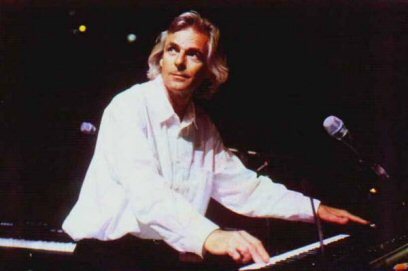
Richard Wright - "Wet Dream" (1978)


To me, Richard Wright is the same sort of figure as George Harrison - the number of songs he wrote wasn't that large compared to the two dominant persons in the band, but the songs he wrote were often really, really good. Wright was the creator of songs such as Remember A Day, Paint Box, Us And Them, and contributed a lot to suites like Atom Heart Mother, Echoes and others. A solo album with such a guy must be filled with treasures. Right?

For those who don't know him, Richard Wright (1943-2008) was the keyboardist of Pink Floyd. As a 12-year old, he taught himself to play guitar, trumpet and piano, and when he met Roger Waters and Nick Mason in the mid-60s, the embryo of Pink Floyd was born.


Wet Dream was created between the Pink Floyd albums Animals and The Wall. During the recording of The Wall Wright was forced to leave the band as he and Roger Waters ended up at odds with each other, he participated thereafter on the The Wall tour, as a hired keyboardist. Thus he was the only one of the Pink Floyd quartet that made money on this tour since it made great financial losses, which affected the people responsible (= the other three PF members). Well, of this Wright was blissfully unaware of the year of 1978 when Wet Dream was recorded.

On the album we hear Mel Collins on saxophone and Snowy White on guitar, both experienced fellow musicians to Pink Floyd. I found the album in Quebec last year for a sum that must be considered reasonable in this context. A great find, but I didn't have high expectations - I had never heard of it, which might be a sign that it didn't arouse much emotions in people, and I have another one of Richard Wright's solo projects (Zee) which is not too good, honestly. And frankly, it was probably good that my expectations were pretty low, it's not an album full of treasures.


It's music that is neither seductive nor challenging, rather it just passes quietly without arousing any reactions from me. Many of the songs are instrumental and the sound is quite soft and gentle, the music gives me some associations with summer, which in itself might be positive - sunny days, no worries, holiday from work but in this case also a fairly uneventful life. One almost longs for a heavy rain, lightning and rolling thunder. Somewhere, there is an embryo of something good, something that stands out and makes you curios, but Wright never takes hold of this and develops. Instead the flowing music continues along its soft lines. It doesn't feel as if Wright has a clear goal or focus with what he does on Wet Dream.

If I pick a song I like a little extra it's Waves, the finishing number on side A. Especially the end of it is beautiful, Wright's fat and powerful synth chords along with a saxophone that somewhere in the distance is heard playing. More of this would have been fun! The song before, Summer Elegy, is also quite OK. Pink's Song on side B is the top number on that side.

In summary, there is no real need to have this album in your record collection. It's not really a bad album, but it's not a very good one either. The problem is that it doesn't do anything for me - no joy, no disgust, no fascination. Neutral music, pure and simple. Maybe even a little bland and boring. Wet Dream made no success at its release, it passed without attracting much attention. As a true Pink Floyd fan, I am nonetheless very pleased to own it. Contradictory? Not at all.

Tracklist
Side A1. Mediterranean C 3:52
2, Against All The Odds 3:57
3. Cat Cruise 5:14
4. Summer Elegy 4:53
5. Waves 4:19

Side B1. Holiday 6:11
2. Mad Yannis Dance 3:19
3. Drop In From The Top 3:25
4. Pink's Song 3:28
5. Funky Deux 4:57


Wednesday, February 15, 2012

Pink Floyd - "Wish You Were Here" (1975)


Some bands become such institutions that they almost become clichés, and some albums are such classics that they almost become boring to discuss (because so many other have already done so). This applies very much to today's theme, both the band and the album. When someone asks me what my favorite band is, and I, after some pretended reflection, respond Pink Floyd, I hear how boring it sounds. It sounds so much cooler to answer Zappa, The Strawbs or Hatfield & the North. And as I often respond Wish You Were Here on the issue of favorite album, again, it sounds a bit boring and average. Almost a little mainstream, and is there anything a music connoisseur don't want to be it's mainstream.


However, it can not be helped, I'm a big fan of Pink Floyd and especially this album. Although not always ending up on the top spot in my own "Best album ever" list, it always gets a top 3 position. In other words, a really good album. (Sometimes, when I'm in an extra adventurous mood, I can give first place to an album like Love's Forever Changes).

This album was purchased in the golden teenage years, an era which was a great journey of discovery in the musical landscape. I was problably around 18 years old when I bought it. Some music I bought in my teens I have trouble listening to today. It's too associated with these years and I have progressed in my musical taste. But Pink Floyd's creations are as good yet, and I will most certainly still like them when I'm  70+.

What can you say about the music on the album? First of all, the preceding album was Dark Side Of The Moon, and how can you make a follow up on a record like that? The answer is of course Wish You Were Here where, according to me, PF reached even higher. Most of you have probably heard the song/songs Shine On You Crazy Diamond, which is divided into two long suites, one on each side. A superb song which is kind of dedicated to Syd Barrett, but "Shine On is not really about Syd—he's just a symbol for all the extremes of absence some people have to indulge in because it's the only way they can cope with how fucking sad it is, modern life, to withdraw completely. I found that terribly sad. " (Roger Waters). This is one of my favourite song, all categories. The essence of modern music?


The title track is also a classic that doesn't really need to be commented on, problably the song from this album that's been played the most - both on radio and by street troubadours. I myself was extremely proud when I managed to play the song's riff on guitar. On the song Have A Cigar, the folk singer Roy Harper sings since Waters had some voice problems and thought that he didn't have the vocal range required for the song, and Gilmour simply didn't want to sing it. Apparently, Gilmour added some guitar on one Harper song (he recorded in a neighboring studio at the same time), so Harper returned the service. Waters, however, later regretted this decision since he then thought he should have sung himself. But perhaps it was wise since the song is a murdering criticism of the music industry. Better let Harper take the shit for that, right?

A classic story from the recording, that most of you probably already have heard, is that of Syd Barrett coming right in to the studio during the recording. The band members hadn't seen him in years and as he now looked radically different they didn't at first recognize him. When they realized who it was some started to cry. According to legend Syd listened to Shine On ... and didn't like it. He then disappeared from the studio.
Syd visiting the studio
This was Pink Floyd's ninth studio album and was recorded at Abbey Road Studios. One of my favorite albums but I really don't have much to say about it. Maybe you find that strange, but most have already been said.


Tracklist
Side A
1. Shine On You Crazy Diamond, Pts. 1-5 13:32
2. Welcome To The Machine 7:31

Side B
1. Have A Cigar 5:07
2. Wish You Were Here 5:34
3. Shine On You Crazy Diamond, Pts. 6-9 12:29