Wednesday, October 4, 2017

Stewart Copeland - "Rumble Fish" (Soundtrack, 1983)


Soundtracks can sometimes be a bit tricky, it can be difficult to ignore the images and feelings one has from the movie, so objective listening becomes difficult, or the music may tend to get too atmospheric and formless without its visual complement. Concerning the soundtrack to Rumble Fish, it's the first dilemma I often end up in. I've seen the movie so many times, I know it by heart, so every song has a hard time standing for itself without my brain producing images from the movie. I'm having difficulties hearing the music just as music.

It was Coppola who directed the film, he also produced it along with some others. He started making the film's music himself, some sort of percussion-based music that would symbolize the passage of time. He realized, however, that he needed help and recruited the drummer of The Police, Stewart Copeland. And quite quickly, Coppola realized that Copeland was his superior when it came to composing music, and gave him free hands.

Stewart Copleland

Stewart Copeland plays most instruments himself, and he does it well. All songs are instrumental except the opening song, Don't Box Me In, where Stan Ridgway sings. Apparently it became something of a hit and got some radio play. Not a personal favorite, though. For being a soundtrack, the album is pretty OK. There are no atmospheric compositions to be found, rather it's usually a clear beat and lots of energy in the music, Copeland is a drummer after all. There's no risk of falling asleep. However, in the long run, it may become a bit repetitive, Copeland seems to have found his sound on the album and sticks to it. It's the same instrumentation overall, the music is often played in some kind of backbeat, giving the songs a specific characteristic, and some themes are repeated, as it often is  on soundtracks.

I found the record recently in one of the local stores for used records, and couldn't resit buying it. Mostly as a nostalgic nod to the younger version of myself who had Rumble Fish as the absolute favorite movie and inspiration in life.

Motorcycle Boy, the film's hero


Tracklist

Side A
1 Don't Box Me In 4:36
2 Tulsa Tango 3:45
3 Our Mother Is Alive 4:13
4 Party At Someone Else's Place 2:32
5 Biff Gets Stomped By Rusty James 2:22
6 Brothers On Wheels 4:08

Side B
1 West Tulsa Story 4:00
2 Tulsa Rags 1:33
3 Father On The Stairs 3:01
4 Hostile Bridge To Benny's 1:52
5 Your Mother Is Not Crazy 2:48
6 Personal Midget / Cain's Ballroom 5:54
7 Motorboy's Fate 2:06


Traveling Wilburys - "Vol. 3" (1990)


The news about Tom Petty's unexpected death causes today's post as he was one of the members of the super group Traveling Wilburys. I only have one solo album with Petty, Southern Accents, and I have already written about that one. His sudden passing was sad news, Petty was relatively young, and although I don't have much of his music, I really liked him person wise. In all the interviews I read with him, and all the articles about him, he seemed to be an unusually nice guy. Down to earth and full of laid backed humor. Full Moon Fever is an album I've always been thinking of buying, but haven't so far, mostly because I've heard all the songs from the album so much that there's no curiosity left. And yes, I know lots of Petty fans think there are other, better, albums with him.

Vol. 3 was Traveling Wilbury's second album, it was George Harrison's idea to call it Vol. 3 to joke with and confuse the album buyers a little. The band was Harrison's creation, and he was considered to be its leader. The story behind the band was that Harrison needed to record a B-side on a single, and asked Jeff Lynne if he wanted to help out, then called Dylan to borrow his home studio, knocked on Petty's door to borrow a guitar (they all were in L.A, according to the story). And everyone asked if they could join in, and voila, a new band was created. How Roy Orbinson joined the story does not tell, but these five legends were the band on its first album released in 1988. Soon after, Orbison died, so at the time of Vol. 3, they were a quartet.


Nowhere on the record are the members mentioned by their real names, instead they are presented as their alter egos, the brothers Clayton (Jeff Lynne), Spike (George Harrison), Boo (Bob Dylan) and Muddy Wilbury (Tom Petty). As for the music, it's not really my thing, and this sequel got a slightly cooler reception than the debut. It's fast-paced rock, heartland rock, some folk and country & western, but obvious hits are missing. All songs are written by the members together, according to the record, and maybe that was so, although different members certainly contributed differently to different songs. According to what I read in some article they often sat around the kitchen table, someone found a riff, someone else added some, a third one came up with some lyrics, etc. I imagine they had quite fun together.

Personally, I've never been very fond of the kind of music that Traveling Wilburys offers, on Vol. 3, it's an album that's more fun to have in the collection than it's good. I rescued the record from my parents' collection when it was heading for the dump, or the local flea market. With now Petty deceased, and Harrison and Orbison since long, of the original Wilbury brothers, not even half remain.


Tracklist

Side A
1. She's My Baby
2. Inside Out
3. If You Belonged To Me
4. The Devil's Been Busy
5. 7 Deadly Sins
6. Poor House

Side B
1. Where Were You Last Night?
2. Cool Dry Place
3. New Blue Moon
4. You Took My Breath Away
5. Wilbury Twist


Monday, October 2, 2017

Wire - "Object 47" (2008) + "Read & Burn 03" (EP, 2007)


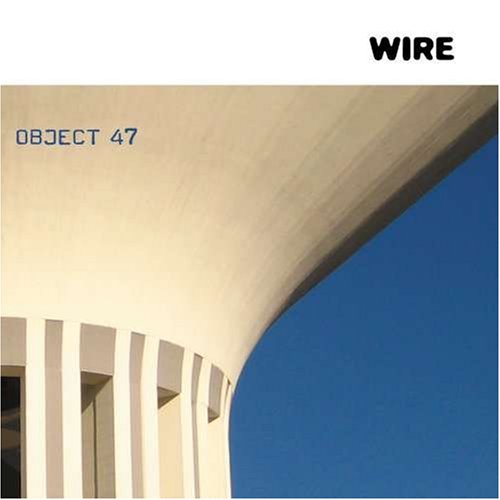
I actually bought album for one single reason, the cover. Born and raised in Uppsala, Sweden, I couldn't resist, everyone familiar with the town recognizes what's on the cover. At first, however, I couldn't believe it was true, why would Uppsala's water tower be on the cover of an album with Wire, a legendary British punk band? They must have a similar water tower in England, designed by the same architect. But the mystery was solved when I read online that the band's bassist Graham Lewis resides in Uppsala since the late 80's, thanks to meeting his wife-to-be there. He is, of course, the one who has taken the photos on Uppsala's water tower, there are also some of them on the inner sleeve.

This was Wire's 11th studio album, and their 47th object in their discography, hence the title. As usual, the band's high quality art-post-punk-pop is solid, and they deliver a good album. This is the fourth album I acquired with Wire, so my knowledge of the band's music is relatively limited. But compared to my other Wire records, Object 47 is quite fast-paced and uptempo all the time, the dark, calm, suggestive songs / sound creations are not found on this album, which is something I can miss. I've liked these pauses from the more fast-paced songs earlier, it creates an interesting contrast, and let your ears rest for a while.


This was the first album without the guitarist Bruce Gilbert, so the band had become a trio. Despite the lack of the more dark and calm creations, I like the record, especially the choruses tend to stick in the head. Many of the songs on Object 47 are really catchy, catchy art-punk-pop.

As a bonus, the band / label has added the EP Read & Burn 03 from the previous year in the sleeve. Four songs are offered here, which are also high quality creations. The initial, almost 10-minute, 23 Years Too Late is probably the most odd creation, even though it's by no means "difficult". But here I get somewhat compensated regarding to the LP's lack of more odd songs / musical experiments.

So on the whole, a nice, fast-paced album. Wire rests clearly in the punk genre, despite various other influences, so if you're allergic to punk,  maybe you wont like Object 47. But it is melodious, catchy, and not as neurotic as on some of their other albums.

Whole of Uppsala water tower (pic not from the LP) 


Tracklist

Page A
1. One Of Us
2. Circumspect
3. Mekon Headman
4. Perspex Icon
5. Four Long Years

Page B
1. Hard Currency
2. Patient Flees
3. Are You Ready
4. All Fours


Read & Burn EP

Page A
1. 23 Years Too Late
2. Our Time

Page B
1. No Warning Given
2. Desert Diving


Friday, September 29, 2017

Talking Heads - "The Name Of This Band Is Talking Heads" (1982)


Today's theme is a live album with Talking Heads, a double album as is often is with live records, released before their more known live album Stop Making Sense (not a double). Less known but as good.

I have read that at the time of the release, it was rumored that the band might take a break for an indefinite period, or even quit altogether, so the label (Sire) became worried and hurried to release this album while the band still existed. It turned out the band continued to play for a number of years, so all the worrying for nothing.

The first record has songs recorded in 1977 and 1979, and the second was recorded during the 1980-81 Remain In Light tour. On the first record, the band appears as a quartet in its original setup. The songs here are mainly from the first two albums 77 and More Songs About Buildings And Food. In addition, Air and Memories (Can't Wait) from the Fear Of Music album appear as well. As a treat, the band also performs the previously unreleased song A Clean Break and Buildings On Fire, only released on single at the time.


The second disc contains songs mostly from Fear Of Music and Remain In Light. At these concerts, the band has recruited help from lots of fellow musicians to be able to perform the more complex songs from Remain In Light, and they are about ten people on stage. On guitar you'll hear Andrew Belew, best known from King Crimson, in several of the songs. He has a distinctive style of playing that makes a certain mark on the sound.

In other words, there are songs from the band's first four albums that are performed, plus the two mentioned. You can really hear the band's growth, on the first disc there are smaller venues, it almost sounds like they are in my living room playing, and the audience is fewer in numbers. On the second disc, you'll hear there's a larger audience and the band has grown into a ten man orchestra on stage, the distance feels bigger.


Personally, I like the first record better. In the band's original form, the sound is tighter, clearer and cleaner. The songs are easier to listen to and embrace. As there are so many participants in the performances of the second  record, the sound is more messy and unclear. In addition, Remain In Light is a very produced album with a sound that is difficult to recreate outside the studio, making these songs more different than those on the first record, compared to the original songs. The songs feel more unpolished and raw, and are significantly heavier than on the studio album, the same goes for the songs from Fear Of Music. But it's a  question of taste, and many certainly prefer the second record with the heavier sound. With this being said, I don't dislike the second record, not at all, but I like the studio version of Remain In Light better.

If you like Talking Heads and don't have this album, I think you should get it. It's fun to hear the band live, and the live versions really give the songs something new. Additionally, you get the songs A Clean Break and Buildings On Fire that are not found on any LP with the band, and these two songs have grown over the years to become two favorites of mine. During my teens I didn't listen so much to this album, I liked it, but usually preferred the songs in its original versions. But the older I've become, the more I like it. And Take Me To The River is such a groovy finish of the album.


Tracklist

Side A
1. New Feeling
2. A Clean Break
3. Don't Worry About The Government
4. Pulled Up
5. Psycho Killer

Side B
1. Artists Only
2. Stay Hungry
3. Air
4. Buildings On Fire
5. Memories (Can't Wait)

Side C
1. In Zimbra
2. Drugs
3. Houses In Motion
4. Life During Wartime

Side D
1. The Great Curve
2. Crosseyed And Painless
3. Take Me To The River


Thursday, September 28, 2017

Röda Bönor (1976)


Röda Bönor (which means both Red beans and Red chicks) is considered to be the first girl band in the Swedish music-political movement in the 70s, and one of Sweden's first feminist bands. The band existed from the mid-70s to the early 80s and released two full-length albums, of which this self-titled one was the first.

This was a record I rescued from my parents' collection when they were about to get rid of all their vinyl albums. One might suspect that this album was my mother's. Looking purely from a musical angle, this is not my thing, but it's fun as a time document. The Swedish prog music of the 70s was not like the international version (King Crimson, Yes, Gentle Giant etc). Instead it was a musical-political movement (left, of course) where bands sang songs about socialism, a fair and just society, fought for society's forgotten people and despised the factory owner. This scene consisted of two kinds of bands, according to me, those who had their message as priority one and where musical know-how was secondary, and bands which had a balanced priority between political messages and musical quality. An example of the latter could be Nationalteatern, which has created many songs and albums that are real classics today. Röda Bönor I would spontaneously sort into the first group.


The messages on the record are the women's struggle - gender equality  - and the socialist struggle, prioritized in that order, as I see it. These are two questions you can quite easily sympathize with, but as I primarily listen to music for an auditory beauty experience, I don't like the songs. They have stripped down arrangements, the sound is relatively dry and primitive, and there is honestly not much that appeals to them. It's a mix of own songs and some traditional, with newly translated lyrics. Lots of harmonies in the singing.

The song lyrics about the socialist struggle feel pretty outdated today, and it's with a inner smile I hear these messages. The perspective has somewhat shifted, and the struggle is done in a different way today. But the lines about the women's struggle feel more current, although I rarely hear these thoughts delivered so coarse and straightforward as on the album. You would blush if you knew. But that's fun! The 70's seems to have been more radical and the struggle more aggressive. I grew up in the 70's, but the will to fight doesn't seem to have spread to me. Maybe it was color TV that got in the way.

Röda Bönor was formed in Lund, where I lived in the 90's for some time. For some of these years I lived in Smålands Nation, a building with student dorms, at the time the socialist-communist center of the town. Surely, Röda Bönor would have been a popular album. But to me, this is primarily a time capsule from an era that is gone, when the leftist struggle was more important, and a real hope of change existed. But musically speaking, it's not much to have. No good songs.


Tracklist

Page A
1. Oh Carol 2:19
2. Sången Om Ann-Marie 4:33
3. Diskoteksjakt 3:49
4. Kotten1:02
5. Nya Songes 3: 3
6. Det Ska Bli Slut På Rumban 4:45
7. Skärp Dig Ann-Marie 2:03
8. Faellesang1:42

Page B
1. La Lega 3:33
2. Sången Mot Familjen 2:37
3. Denna Karl 3:43
4. Kärlek4:30
5. Vaggsång 1:00
6. Sången Om Kvinnans Otäcka Roller 6:20


Tuesday, September 26, 2017

Marie-Pierre Arthur - "Si l'aurore" (2015)


Marie-Pierre Fournier, as her real name is, comes from the small town of Grande-Vallée, located in the Gaspesie area of ​​Quebec. I traveled there this summer and must have passed the village without knowing it was Marie-Pierre's native village. Now, I don't know if it had made a big difference to the quality of that day, but maybe I would have taken a photo which I could have included in this post for a more genuine feeling.

Nowadays, Marie-Pierre lives in my new hometown of Montreal, so in other words, local music is on the agenda today. Perhaps I have met her on the street, without knowing it? Had it been even more impressive if I had a photo of me and her together in this post? But only dreams and fantasies.

Si l'Aurore is her third album, and I bought it because I have and like her self-titled debut album from 2009. Unfortunately, I don't like Si l'Aurore as much, and have trouble becoming a good friend with it. Actually, there's nothing clearly bad about the album I can put my finger on, the sound and song quality is of good craftsmanship, but I just don't like a lot. I think it's a little too poppy for my taste. It works OK as background music when you do something else, or maybe you have a local visiting. It's a simple trick if you want to become friends with a Montrealer, to show you have some local albums in the shelf. They like that.


The album is produced by Marie-Pierre's husband Francoise Lafontain, and a bunch of other Montreal musicians with French sounding names are involved. Marie-Pierre is a bass player in addition to singer, and manages that instrument on the songs. It's sung in French, which may have somewhat of a negative impact on my experience, as I have been brainwashed during life to associate music with the English language (or Swedish). French is a beautiful language, but when I hear it in movies or music, the experience often gets an extra intellectual layer, which is not always good for a more emotional enjoyment.

So personally I would rather recommend Marie-Pierre's debut album than Si l'Aurore. I haven't heard her second album.


Tracklist

Page A
1. Rien À Faire
2. Cacher L'Hiver
3. Si L'Aurore
4. Il
5. Come Avant

Page B
1. Le Silence
2. La Toile
3. Papillions De Nuit
4. Dance Ma Tête


Monday, September 25, 2017

Alt J - "Relaxer" (2017)


The third album from one of my favorite bands, when it comes to contemporary groups. Recorded in London with Charlie Andrew as producer, who also produced their first two albums. It's a really good album, one of the few records where each song is qualitative and worth spending time on. No fillers. OK, Adeline on side B I find a little boring, but the rest of them all have their unique character and beauty.

The band offers a varied musical journey. Many songs are quite suggestive, calm and a bit dark, but sometimes they go on a more high speed travel, such as Hit Me Like That Snare, which describes quite brutal scenes at a Love Hotel. An interesting version of House Of The Rising Sun with some new verses, created by the band, is kind of a odd bird, but works well. The closing number / hymn Pleader is a great song, with a powerful arrangement that makes one associate with church choirs' descriptions of paradise and salvation. A nice end of the album, and you might find yourself considering joining the Salvation army.


The album was marketed, among other things, by a computer game created specifically for the album by Osamu Sato, based on his PlayStation game LSD from 1998. All the artwork on the record and in the marketing was taken from the game. It was made available to be played on the band's website, but I haven't tried it. My mother told me to stay away from mind expanding stuff.

So I can definitely recommend this album. Alt J is a band which creates music that is often not that simple, much of what they've done one needs to hear a few times to get to know. Sometimes they make me think of the 70's progressive bands. Alt J is usually more accessible, but they create music that can often be something of a challenge for the listener, which requires focus. Despite that, they have been successful and must be considered a rather big band. This delivers hope for today's music world and listeners.


Tracklist

Side A
1. 3WW
2. In Cold Blood
3. House Of The Rising Sun
4. Hit Me Like That Snare

Page B
1. Deadcrush
2. Adeline
3. Last Year
4. Pleader